A woman in Sevastopol filled her gas tank early last week before the pumps ran dry. She did not give her name for safety reasons, but she described a city living under constant strain: air raid sirens several times a day, drones being intercepted overhead, and a place that now feels more dangerous than it once did. She was not describing the opening days of Russia’s invasion. She was describing Crimea today, where Ukraine’s latest pressure campaign is no longer theoretical but visible in the daily life of the peninsula’s residents. Crimea and Sevastopol declared a state of emergency after Ukrainian attacks hit the peninsula’s energy grid and infrastructure.
- Ukraine’s strikes are creating real military and economic pressure, but they are also landing in the middle of an active U.S.-backed peace push.
- The campaign may give Kyiv leverage, while also giving Putin a powerful domestic argument for continuing the war.
On Friday, Russian authorities made the situation official. The regional government of Crimea and the city of Sevastopol declared a state of emergency, a move normally associated with disasters such as floods or earthquakes. The official explanation focused on speeding up property-damage claims, allowing local businesses to invoke force majeure, and freeing up emergency resources. But the real reason was sitting in plain sight: Ukraine’s drones had been striking the peninsula’s power grid for days, turning Crimea from a symbol of Russian conquest into a pressure point Kyiv is now exploiting.
Sevastopol’s main substation was hit seven times in one overnight stretch, and fuel sales to ordinary residents were suspended, with remaining gasoline reserved for government use. Lines at the Kerch Bridge, the only land connection to mainland Russia, stretched to nearly 2,800 vehicles, with hours-long inspections and nearly twice as many cars trying to leave Crimea as enter it. The same pressure was visible in the peninsula’s tourist economy, where hotel bookings have fallen close to 90 percent compared to last year, according to details shared about the emergency in Crimea.
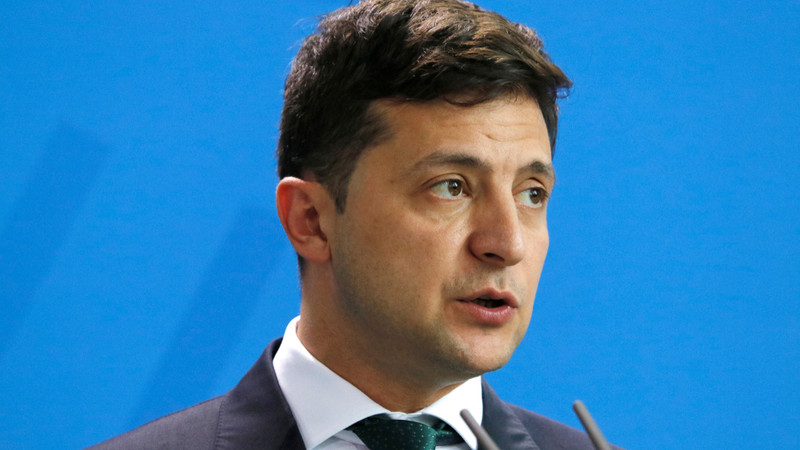
This was not a random strike or a lucky hit. Ukrainian forces also targeted a Black Sea Fleet shipyard in Kerch, damaging vessels built for Russia’s military, along with parts of an S-400 air defense system guarding the strait. President Volodymyr Zelensky was unusually direct about the purpose of the operation, framing it as a calculated effort to push Russia toward peace. That clarity matters. Most wartime leaders do not publicly describe their pressure campaign in such plain terms, especially when the stakes include both military escalation and diplomatic negotiations, but Zelensky’s position was tied directly to Ukraine’s broader effort to pressure Russia over Crimea.
There is a strong case that Kyiv deserves credit here. This campaign appears to rely heavily on Ukraine’s own drone industry, not on a new wave of American missiles. For years, the debate in Washington has been trapped between two extremes: cut Ukraine off completely or keep writing open-ended checks. What is happening in Crimea suggests a third path that gets far less attention. Ukraine has built real capacity of its own, and its leverage does not have to depend entirely on weapons pulled from Pentagon stockpiles.
But the timing is impossible to ignore, and it may not work in Kyiv’s favor. For much of this year, the Trump administration has been trying to close out the war. Steve Witkoff and Jared Kushner have been involved in rounds of negotiations with Russian and Ukrainian officials, while the White House pushed toward a goal of ending the fighting by the start of summer. That diplomatic effort has not produced a signed deal, but it has produced something meaningful: the closest the two sides have come to a framework since the full-scale invasion began, with the latest push tied to U.S.-backed peace talks.
The reported American proposal has included terms that would ask Kyiv to surrender territory in Donetsk that Ukrainian forces still physically hold, a condition Zelensky has resisted and European allies have viewed with concern. That makes the Crimea campaign even more sensitive. Ukraine is not simply striking Russian military assets; it is doing so while the administration in Washington is trying to persuade both sides to accept painful compromises. The White House’s push for a peace deadline has already placed pressure on Kyiv, and the battlefield campaign now intersects directly with that Trump-backed peace effort.
That is where the danger begins. Blacking out parts of a Russian-held peninsula and forcing a state of emergency is not a minor move in the middle of negotiations. Tatiana Stanovaya, who runs the political analysis firm R.Politik, warned that the strikes may not pressure Putin to make a deal. Instead, they may intensify anti-Ukrainian sentiment inside Russia and give Putin an easier explanation for continuing the war. A Kremlin that can point to citizens trapped in five-hour bridge lines and fuel shortages has a stronger domestic story than a Kremlin being asked to sign an agreement and move on.
None of this means Ukraine is wrong to strike Crimea. Crimea remains Ukrainian territory under international law and under the position every American administration has held since 2014. A naval shipyard and an air defense system are legitimate military targets in a war Russia started and has refused to end on terms other than its own. Supporters of Kyiv’s campaign would argue that years of patient diplomacy brought Ukraine more dead soldiers, more destroyed cities, and more lost ground, while actual leverage has come from the battlefield, not from hotel conference rooms in Abu Dhabi or Geneva.
They would also argue that waiting for Moscow to negotiate in good faith has mostly meant waiting while Russia reorganizes, re-arms, and keeps advancing. From that perspective, the strikes in Crimea are not reckless; they are rational. They force Russia to pay a price in a place it has long treated as untouchable. They also remind Moscow that occupation does not create permanent safety. The emergency declaration in Crimea, also highlighted by Yahoo’s coverage of the crisis, shows that Ukraine can bring the consequences of the war directly into a territory Putin once believed he had secured.
Still, both things can be true at the same time. The strikes are working as military and economic pressure, and they may also make a peace agreement harder to finalize. Russia’s state media environment thrives on images of victimhood, and every bridge delay, power outage, and fuel shortage can be turned into a justification for more war. That is the hard reality of this moment: Ukraine’s campaign may be tactically effective while strategically risky. The emergency measures described by SANA’s international coverage and Ukrainian outlets tracking the occupation, including Intent’s update on Crimea and Ukraine Today’s coverage, all point to the same basic fact: Crimea is under pressure in a way Russia can no longer easily conceal.
The Trump administration’s problem is that pressure does not always translate neatly into peace. It can force an enemy to negotiate, but it can also make compromise politically impossible. A peace framework already faces deep mistrust in Kyiv, where many Ukrainians fear that American mediation could push them toward concessions that reward Russian aggression. That concern has been part of the broader debate over Ukraine’s confidence in U.S. mediation, especially as negotiations have raised questions about what Kyiv may be asked to give up in exchange for an end to the fighting.
The same uncertainty explains why this moment feels so volatile. Zelensky is trying to prove Ukraine still has leverage. Trump is trying to prove he can end the war. Putin is trying to prove Russia can absorb pain and continue fighting. Each leader has a different incentive, and Crimea is now the place where those incentives collide. Even earlier diplomatic momentum between Trump and Zelensky showed how difficult the path to a deal would be, especially when Ukraine’s territorial integrity and Russia’s demands remain so far apart, as seen in previous discussions over a possible Ukraine-Russia peace deal.
That is why the woman in Sevastopol matters. She is not a policy paper, a military asset, or a negotiating position. She is one of the civilians living under the consequences of decisions made by men in capitals and conference rooms far from the drones overhead. The same is true for the people in Kyiv who have spent years facing blackouts, bombardment, and winter nights without reliable heat. War turns ordinary people into bargaining chips long before anyone asks them what they want.
Moments like this are also a reminder that uncertainty is not limited to battlefields overseas. Political instability, debt, inflation, and global conflict all have a way of reaching into ordinary households, including retirement plans and long-term savings. The national debt continues to climb, and that creates real concern for Americans trying to protect their retirement. Augusta Precious Metals has created a free 3-minute report, “Prepare Your Retirement Now: Debt Will Hit $40T in 2026,” to help readers think through ways to take more control of their financial future. You can get instant access to the report here.
In the end, Ukraine’s Crimea campaign may be exactly what Kyiv believes it needs: pressure, disruption, and proof that Russian occupation can still be made costly. But it may also be exactly what Putin needs to harden public opinion and justify another year of war. That is the uncomfortable truth at the heart of this story. Ukraine may be moving closer to battlefield leverage, while the world moves further from a clean diplomatic ending.
© 2025 TurleyTalks.com. All rights reserved.
Gain the Clarity, Confidence, and Community you need to lead with courage and awaken a new conservative age. Join the movement to fight back and reclaim freedom at fight.turleytalks.com!