Something monumental is unfolding that is reshaping global dynamics! For decades, Iran has held the world hostage, controlling the planet's most crucial energy chokepoint. But now, that leverage has been decisively stripped away.
- U.S. Central Command has launched a relentless campaign against Iran, systematically dismantling its maritime threat.
- The UAE and Saudi Arabia are building pipelines to bypass the Strait of Hormuz, reducing Iran's strategic grip.
- U.S. energy exports are soaring, with American producers capitalizing on the shifting landscape.
U.S. Central Command has just completed its twelfth consecutive night of strikes against Iran, marking nearly two weeks of relentless American firepower. Wednesday night was no exception, as CENTCOM unleashed a barrage, targeting maritime capabilities, missile and drone storage depots, coastal surveillance sites, and air defense systems. This strategic campaign is systematically dismantling Iran’s ability to threaten civilian mariners, having already redirected nine commercial vessels and disabled another to maintain an airtight naval blockade. President Trump has drawn a hard red line, pledging to obliterate infrastructure every time Iran targets a vessel in the Strait of Hormuz. With over 50,000 American troops stationed across the area, this military engagement shows no signs of abating. However, beyond the bombs and blockades, the real story unfolds underground, with pipelines and rerouting of supply chains that few are noticing.
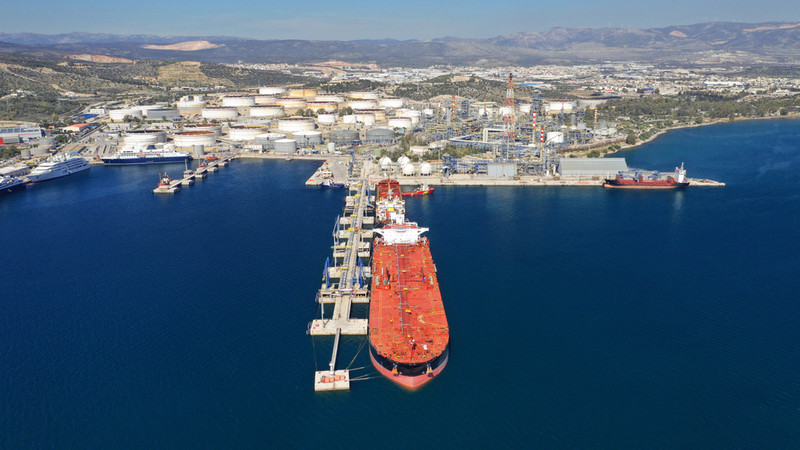
The Abu Dhabi National Oil Company, a giant in the global energy sector, has confirmed a new pipeline bypassing Hormuz is nearly 50 percent complete. This project will double export capacity at the port of Fu-JAI-rah, with full operation expected by early 2027. This marks the UAE's second pipeline to Fu-JAI-rah since 2012, historically moving about 1.5 million barrels a day, entirely circumventing the strait. The new pipeline will double that capacity. Saudi Arabia joins this strategic move with its east-west Petroline, transporting up to 7 million barrels per day from Eastern Province oil fields to the Red Sea, bypassing Hormuz entirely. Combined with the UAE’s efforts, these initiatives form two primary Gulf bypass routes. While their combined capacity still falls short of the 20 million barrels usually transiting the strait, it's just the beginning.
A massive regional buildout is underway, with Saudi Arabia in talks to further expand its Petroline capacity to 9 million barrels per day and new Red Sea export terminals near the futuristic NEOM development. Iraq, the most exposed nation in this crisis, is constructing a 435-mile pipeline from Basra to Haditha, linking through Jordan, Syria, and Turkey, capable of carrying up to 2.5 million barrels a day, backed by $1.5 billion in construction. The UAE is also planning a new port and container terminal to rival Dubai's Jebel Ali, extending the bypass strategy beyond oil into general shipping and trade. Moreover, the Gulf Cooperation Council is accelerating joint regional infrastructure projects, including shared oil and gas pipelines and coordinated rail, electricity, and water interconnection across member states. Goldman Sachs estimates that if these projects materialize as planned, Gulf producers could bypass the Strait of Hormuz for up to 45 percent of pre-war export volumes by 2027, climbing to 60 percent by 2028. This isn't merely a workaround; it's a wholesale reengineering of the Persian Gulf's oil export framework, diminishing Iran's once-unassailable card.
Interestingly, this transformation of the global oil supply chain doesn't stop there. Another significant exporter is stepping up — right in our backyard! American energy producers are seizing every opportunity from this realignment. U.S. crude oil exports hit a record 6.4 million barrels a day in April, the highest ever recorded by the U.S. Energy Information Association. Total U.S. crude and petroleum product exports soared to a record 12.7 million barrels a day the same month, with crude exports alone averaging 5.6 million barrels a day, 21 percent above the previous record. The week ending April 24 marked a historic moment: the first time in modern American history when the United States operated as a net exporter of crude oil.
West Texas Intermediate — WTI — is riding this wave, with every barrel that previously flowed through Hormuz now replaced by American oil, loaded onto tankers at ports like Corpus Christi and Houston. Corpus Christi alone experienced its busiest month in history this March. It's not just oil, either. U.S. LNG exports broke records in March, climbing to 11.7 million metric tons, as buyers previously reliant on Hormuz-dependent supply turned to American gas. Shipments to Asia more than doubled in a single month.
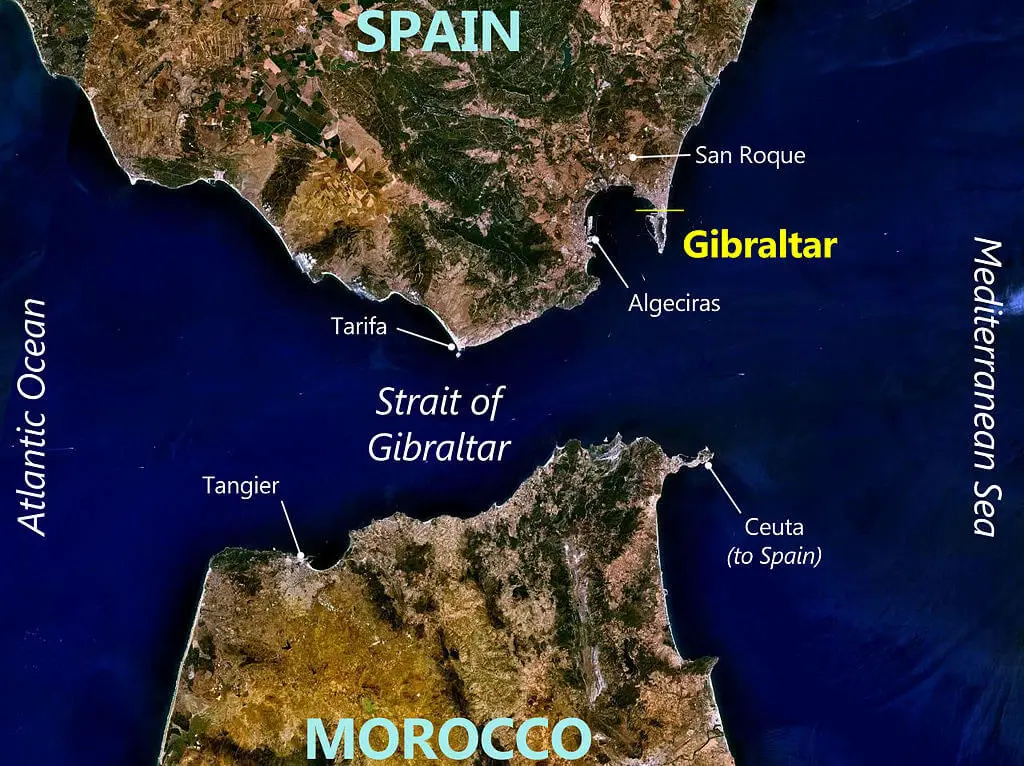
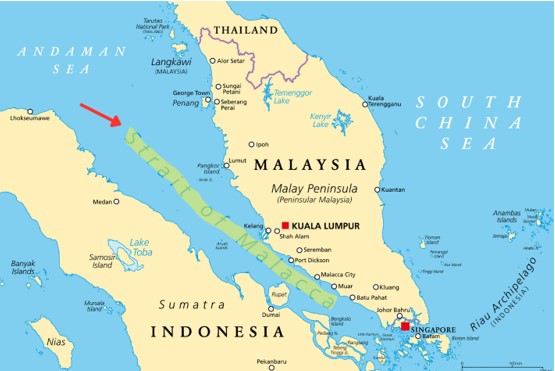
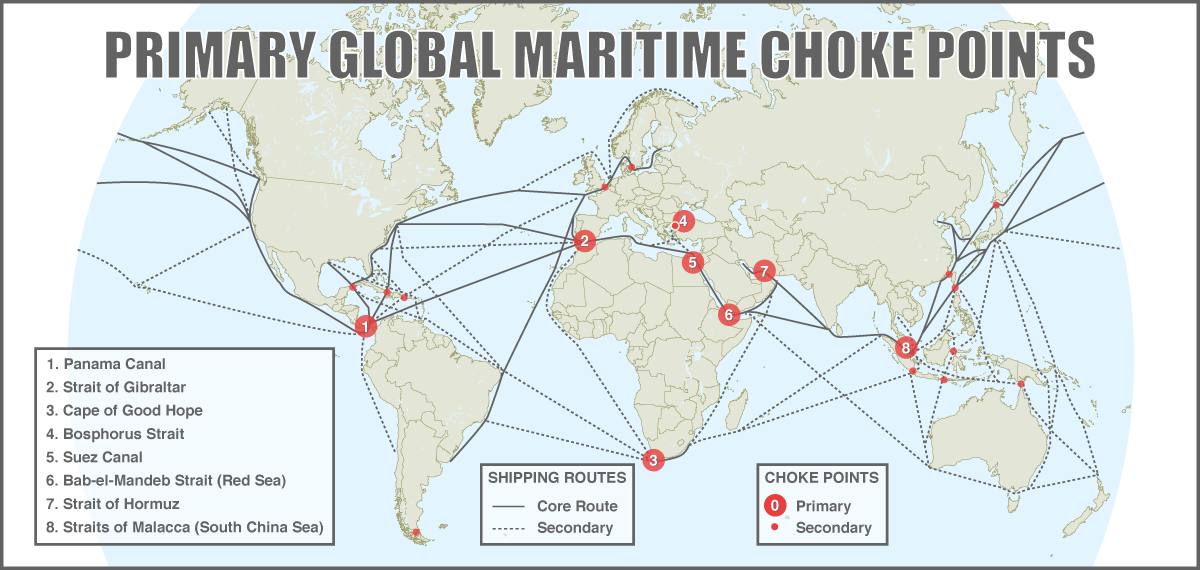
In parallel, the United States has effectively secured control of the world's four major geopolitical chokepoints: the Panama Canal, the Strait of Gibraltar, the Strait of Malacca, and now Hormuz. These strategic moves cover nearly 50 percent of global trade and oil access. President Trump even threatened to charge a toll for ships passing through Hormuz. Thanks to the Abraham Accords, the U.S. now has a deal with Morocco controlling the Strait of Gibraltar. Control of the Strait of Malacca, where 80 percent of China’s imports pass through, further strengthens this strategic hold.
In sum, the architecture of the world's oil supply chain has fundamentally changed. Gulf nations are no longer reliant on Iran's goodwill to transport their oil. They are bypassing Hormuz, collaborating with American oil exports that have reached unprecedented levels, all while the U.S. guarantees the security of this new global oil export architecture. This makes any reopening of the Strait of Hormuz, as discussed in talks since April, significantly less impactful. Iran's once-irreplaceable card is being replaced, piece by piece, barrel by barrel, port by port. The lesson here? You don't need to win every battle to win the war. Sometimes, you make your enemy's best weapon obsolete while your own producers fill every gap.
To navigate this rapidly changing landscape and to stay well-informed, join a community of patriots who are ready to take action. This is the kind of truth that gets you banned—unless you hear it here. That’s why Dr. Steve Turley created The Courageous Patriots Club—a secure community where the truth isn’t censored, and patriots are equipped to WIN. Each week, get private livestreams, action plans, and insider strategies to fight back against globalism, build the parallel economy, and lead your family with confidence. 👉 Join now and become the patriot leader your community needs.
The world is changing — and in many ways, this is only just the beginning.
© 2025 TurleyTalks.com. All rights reserved.
Gain the Clarity, Confidence, and Community you need to lead with courage and awaken a new conservative age. Join the movement to fight back and reclaim freedom at fight.turleytalks.com!