
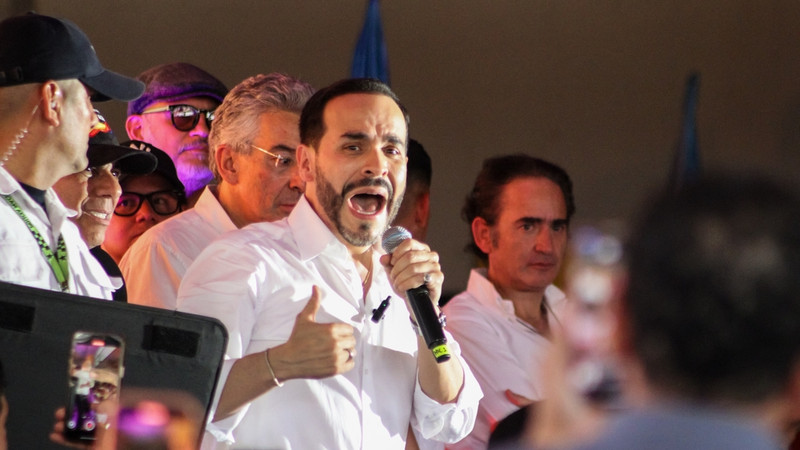
Maria Guadalupe Restrepo does not sound like a political revolutionary. She runs a small bakery in a working-class neighborhood of Medellín, Colombia, and for most of her adult life, she voted for the left. She believed the story she had been told: that poverty was caused by oligarchs, American imperialism, and the failures of capitalism. But after her nephew was killed at seventeen, she began to see things differently. In Colombia’s June 21 runoff, she voted for far-right candidate Abelardo de la Espriella, who was later elected Colombia’s president.
- Right-wing and conservative candidates are winning across Latin America after years of left-wing dominance.
- Voters are increasingly prioritizing crime, security, and public order over ideological promises.
- Brazil’s 2026 election could become the final major test of the region’s conservative realignment.
Her decision was not an isolated one. Across Latin America, voters from the Andes to the Southern Cone have been delivering the same judgment: the left has failed. In less than two years, right-wing or conservative candidates have won presidential elections in Ecuador, Bolivia, Chile, Honduras, Costa Rica, Colombia, and Peru, reflecting a regional pattern of right-wing leaders elected in Latin America.
This shift is now widely being described as the “blue tide,” the right-leaning answer to the “pink tide” that shaped Latin American politics from the late 1990s through the 2010s. The original pink tide in Latin America was led by figures such as Hugo Chávez, Evo Morales, and Lula da Silva, who promised to reduce inequality through state-driven economics, social welfare programs, and resistance to market capitalism. For a time, high commodity prices helped fuel that model. But when prices collapsed, the corruption scandals arrived, economies stagnated, and the left’s moral authority began to rot from the inside.
What replaced it has not been primarily ideological. Voters are not walking into polling places thinking first about GDP growth rates, trade policy, or abstract fiscal debates. They are thinking about their neighborhoods. They are thinking about gangs controlling the corners near schools, small business owners being extorted, families being threatened, and police who either cannot or will not stop the violence. Across South America, crime fears are driving voters away from the old left-wing order and toward candidates promising security.
That is why the right’s winning message has been so powerful. These candidates are not merely promising lower taxes or deregulation. They are a promising order. They are telling voters they will be as ruthless toward criminals as criminals have been toward ordinary people. And for families who have lived for years under the shadow of gangs, cartels, extortion, and political corruption, that promise carries more weight than any academic lecture about inequality.
The model many of these candidates point to is El Salvador. Nayib Bukele’s government, despite fierce criticism over civil liberties concerns, has transformed the country’s reputation from one of the most dangerous places in the world to one of the safest in the region. The conservative wave still flowing across Latin America has made security a defining issue in upcoming regional contests. Costa Rica’s Laura Fernández ran explicitly on an “El Salvador-style” security model, while Colombia’s de la Espriella campaigned on building a mega-prison modeled on Bukele’s CECOT facility.
The left has struggled to understand this shift because it has long assumed that the poor naturally belong to progressivism. The old theory was simple: focus voters on inequality, blame capitalism, expand redistribution, and the poor will support the left. But Latin America’s recent elections suggest that this theory was deeply condescending. Poor and working-class voters are not confused about their interests. They understand that no family can build a stable life where children are recruited by gangs, small businesses are shaken down, and the government treats lawlessness as a social problem to be explained rather than a threat to be defeated.
Bolivia’s shift carries special symbolism. For nearly two decades, Evo Morales and his Movement for Socialism turned the country into a showcase for Latin American socialist governance. But in October 2025, centrist-right candidate Rodrigo Paz Pereira won the presidential runoff, ending that era and making Bolivia another major brick in the blue tide’s wall. The rise of right-leaning candidates has become one of the clearest political trends across the region and beyond.
Chile has moved in the same direction. José Antonio Kast won December’s presidential runoff with 58 percent of the vote, the largest margin in the country’s modern democratic history, and was later inaugurated as Chile’s most conservative leader since the return to democracy. His inauguration marked a historic break with the country’s recent leftward trajectory, as José Antonio Kast assumed Chile’s presidency amid a sharply changing regional climate.
Honduras completed another part of the sweep. Conservative candidate Nasry Asfura, backed by President Trump, won the country’s November election with 40.3 percent of the vote, defeating a center-right rival and ending the progressive government of Xiomara Castro. The victory of Trump-backed conservative Nasry Asfura added another major result to a Latin American election cycle in which left-wing candidates kept falling.
Peru now appears to be another key piece of the puzzle. Keiko Fujimori has held a narrow lead of roughly 39,000 votes, 50.11 percent to 49.89 percent, with certification still underway. As Fujimori edged toward the Peruvian presidency, political tensions rose around the razor-thin result and the possibility of protests. Her potential victory would reinforce the argument that the region’s rightward shift is not a coincidence but a pattern.
Argentina is another major example. Javier Milei won the presidency in 2023 on a libertarian platform that defied easy categorization, and his political movement later followed with a strong midterm performance. Milei’s rise reflects a larger global mood in which voters are rejecting traditional political establishments and embracing disruptive conservative or libertarian alternatives, placing Latin America at the center of a broader rightward political realignment.
The Trump administration has also been an active presence in the region. Washington has cultivated relationships with new conservative leaders, endorsed candidates in Colombia and Honduras, and openly signaled that Latin America’s rightward turn aligns with American hemispheric interests. The fact that Washington is betting on Latin America’s new right reflects overlapping priorities around immigration enforcement, crime, market economics, and skepticism toward multilateral institutions that have often been used for anti-American grandstanding.
Still, it would be a mistake to say this alignment was manufactured by Washington. The political shift predates any single American administration. It has deeper roots in the daily lives of people who endured crime, corruption, inflation, and political hypocrisy. Colombia has struck the latest blow against Latin America’s left, but the broader movement is being driven by voters who are no longer willing to accept ideological excuses for real-world collapse.
The last major domino may be Brazil. The country heads to the polls in October 2026, and that election could become the capstone contest of the entire cycle. President Lula remains politically competitive, but the right-wing opposition has been energized by years of Bolsonaro-aligned organizing and by the same voter exhaustion that has already toppled left-wing governments across the region. The coming vote will serve as Latin America’s test of relevance, revealing whether the right’s momentum is temporary or structural.
None of this means the blue tide is guaranteed to deliver miracles. Kast is polarizing. Milei’s economic experiment remains unproven at scale. De la Espriella’s Colombia faces entrenched problems involving the peace deal, the coca economy, and regional political machines. Even a major electoral mandate does not guarantee national renewal, especially under a new conservative government facing old institutions, divided societies, and enormous public expectations.
But what matters most is the reason voters are making this choice. They are not simply chasing a new political fashion. They are reacting to lived experience. They tried the pink tide. They listened to its promises. They watched leaders speak in the name of the poor while corruption deepened, crime spread, and ordinary families were left defenseless. The blue tide is not just a wave of enthusiasm. It is a wave of exhaustion.
And in an age when political instability can quickly spill into daily life, the desire for order also reminds us of something practical: families want to be ready when systems fail. Whether the concern is crime, natural disaster, or basic survival, preparation is one way ordinary people take responsibility for protecting what matters most.
Political change may begin at the ballot box, but lasting renewal also starts with the choices we make every day for our health, energy, and resilience. In uncertain times, taking care of your body from the inside out is one simple way to stay strong for yourself and the people who depend on you. Kimchi is one of the world’s most powerful superfoods—but it’s not always easy to eat every day. That’s why Brightcore created Kimchi One, delivering all the benefits of fermented kimchi in a simple capsule—no mess, no taste, no hassle.
Each serving provides over 900 probiotic strains, live enzymes, and antioxidants to restore gut balance, boost energy, and support heart, brain, and metabolic health. Made with clean, natural ingredients—non-GMO, dairy-free, gluten-free, soy-free, and 100% made in the USA—Kimchi One helps your body detox, thrive, and age gracefully from within. http://mybrightcore.com/turleytalks
Latin America’s political transformation should not be misunderstood as a sudden ideological conversion. It is something harder, quieter, and more durable: the decision of ordinary people that they have had enough. They have watched the left’s promises dissolve into corruption, excuses, and disorder, and now they are choosing leaders who promise to restore safety first. Whether the blue tide succeeds remains to be seen. But the verdict behind it is already clear: when governments fail to protect their people, voters eventually find someone who says they will.
© 2025 TurleyTalks.com. All rights reserved.
Gain the Clarity, Confidence, and Community you need to lead with courage and awaken a new conservative age. Join the movement to fight back and reclaim freedom at fight.turleytalks.com!
