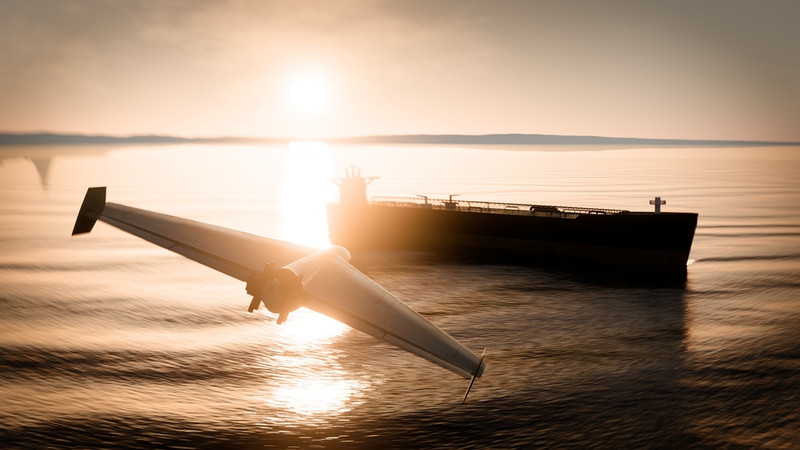
The crew of the Ever Lovely did not set out to become the first major test case for a new geopolitical order in the Persian Gulf. The Singapore-flagged cargo ship had cleared the Strait of Hormuz on Thursday evening, traveling from Umm Qasr, Iraq, toward Singapore, when an Iranian one-way attack drone slammed into its bridge. No one was killed, and the ship continued moving, but the explosion off the Omani coast instantly transformed a paper agreement into a battlefield question.
- Iran’s drone strike against the Ever Lovely became the first major stress test of Trump’s new Iran framework.
- The U.S. military intercepted three of the four drones, signaling that the ceasefire would be enforced in real time.
- The incident exposed both the strength and fragility of a deal that still leaves major questions unresolved.
That is the part of the story most likely to get buried beneath the noise. Just days earlier, the United States and Iran had moved into a new phase of diplomacy through the broader 2025–2026 Iran–United States negotiations, with a framework aimed at ending more than a hundred days of open conflict. The deal reopened the Strait of Hormuz to commercial traffic, lifted the American naval blockade on Iranian ports, extended a fragile ceasefire by sixty days, and began the next phase of negotiations over Iran’s nuclear program.
For a brief moment, the markets responded as if the worst might be over. Oil prices eased. Stocks climbed. Trump urged the world to get moving again and let energy flow through one of the most important shipping routes on earth. But almost immediately, that optimism faced reality: Iran’s Revolutionary Guard launched four drones at ships moving through the same waterway it had just agreed to reopen, directly challenging the credibility of the new agreement and the administration’s willingness to enforce it.
The administration’s response is the central point. The U.S. military shot down three of the four drones before they could reach their targets. The fourth struck the Ever Lovely’s upper deck, prompting Trump to call the attack a foolish violation of the ceasefire on Truth Social while making clear that the United States would continue defending the Strait of Hormuz. The strike, and Trump’s public blame of Iran, placed the incident at the center of the region’s next diplomatic test, especially as the drone strike on the cargo ship became impossible to separate from the future of the ceasefire itself.
That combination of force and restraint is what makes this moment different. The United States did not stand down while hostile drones targeted commercial vessels, but it also did not use the Ever Lovely attack as an excuse to collapse the agreement and return to full-scale escalation. That is the posture the administration’s critics have long claimed Republicans could not manage: strong enough to act, disciplined enough not to overreact.
This is also where the contrast with the 2015 Obama-era Iran deal becomes central to the conservative argument. Critics of the JCPOA have long argued that it traded sanctions relief for promises, inspections, and deadlines while failing to create a credible mechanism for immediate punishment when Iran violated the spirit of the agreement. The new framework is being judged against that history, especially as comparisons between Trump’s approach and the Obama nuclear deal continue to shape the political debate.
The Trump administration’s defenders argue that the 2026 framework was built differently from the start. Defense Secretary Pete Hegseth has emphasized that the military option remains visibly on the table, not tucked away behind diplomatic language or bureaucratic delay. In practice, that means when a drone is fired at a tanker, three out of four get shot down, and the fourth is met with public attribution and a clear warning. That is enforcement in real time, not enforcement promised for some future review in a conference room.
Still, none of this means the deal is secure. The fourteen-point framework leaves Iran’s ballistic missile program and its regional militia networks unresolved. It does not fully settle who controls the Strait of Hormuz going forward. Oman has already suggested it may try to impose transit fees once the current toll-free period expires, a move the Trump administration has rejected. Iran’s parliament speaker is also clashing publicly with Trump over frozen Iranian assets and how they may be used. Those unresolved tensions keep the agreement fragile, even as the latest U.S.-Iran deal updates continue to shape the next stage of negotiations.
The regional atmosphere remains tense as well. A missile alert in Dubai, later identified as a false alarm, was enough to unsettle a region that has spent more than a year bracing for the next strike. Analysts examining the interim peace deal have pointed to the same basic reality: the agreement may have created breathing room, but it has not removed the deeper sources of conflict. A ceasefire can stop the shooting for a time; it cannot automatically resolve the ambitions, rivalries, and mistrust that produced the war in the first place.
That is why the Ever Lovely incident matters so much. It does not prove the deal is a sham, as some critics rushed to imply the moment the drone struck. Iran tested the ceasefire, and the United States enforced it without restarting a wider shooting war. In that limited but important sense, the agreement functioned the way it was supposed to function. The administration’s handling of the Strait of Hormuz drone incident showed that deterrence and diplomacy do not have to be opposites.
But it also does not prove the deal is airtight. A ceasefire that requires American warships to shoot down Iranian drones within days of being signed is not yet peace. It is a pause, and both sides appear to understand that the negotiation is still being conducted with weapons close at hand. The broader U.S.-Iran peace deal and nuclear talks remain vulnerable to every provocation, every miscalculation, and every political faction that benefits from escalation.
The political challenge at home is just as real. A majority of Americans disapprove of Trump’s handling of the broader Iran conflict, and even within his own coalition, there is no perfect consensus. Some MAGA Republicans still prefer regime change in Tehran, while others are willing to accept a negotiated settlement if it ends the war and keeps Iran contained. The administration is therefore trying to sell a delicate message: this is not weakness, but controlled strength; not surrender, but enforcement without endless war.
That balancing act may be the most important story of all. Trump’s critics want the drone strike to prove that diplomacy has failed. His strongest supporters want the military response to prove that the deal is already working. The truth is narrower and more serious than both claims. The Ever Lovely attack shows that Iran is still willing to test boundaries, and it also shows that the United States is willing to enforce those boundaries without automatically detonating the entire agreement. The wider Iran agreement over the nuclear program and regional conflict will now depend on whether that balance can hold.
The economic stakes remain enormous. The Strait of Hormuz is not just a regional flashpoint; it is a global energy artery. A serious disruption there can send shockwaves through oil markets, consumer prices, and supply chains almost overnight. That is why the opening of the waterway, the fall in oil prices, and the market rally mattered in the first place. The same reason the Strait of Hormuz and oil prices reacted so quickly to peace is the reason one drone strike can revive fears of another economic and military spiral.
The next sixty days were always going to determine whether this framework becomes a real settlement or another temporary pause before the next round of conflict. The Ever Lovely did not answer that question, but it made clear how the question will be asked: one tanker, one drone, one military response, and one public warning at a time. That is also why legal and national security observers continue watching the early developments after the agreement so closely. The deal’s future will not be decided by the signing ceremony. It will be decided by enforcement.
In uncertain times, fragile systems can break fast, and families often feel it first. That’s why the Pure Water Straw is a smart backup, turning lakes, streams, or floodwater into safe drinking water in seconds. Get yours here.
The Ever Lovely strike did not destroy Trump’s Iran deal, but it did reveal the truth about it. This is not a settled peace. It is a dangerous pause being protected by American power in real time. If the administration can keep enforcing the agreement without allowing Iran to drag the region back into war, the deal may become something more lasting. But if the next drone, missile, or miscalculation breaks that balance, the world will quickly learn that the hardest part of making peace is not signing the agreement—it is making the other side respect it.
© 2025 TurleyTalks.com. All rights reserved.
Gain the Clarity, Confidence, and Community you need to lead with courage and awaken a new conservative age. Join the movement to fight back and reclaim freedom at fight.turleytalks.com!