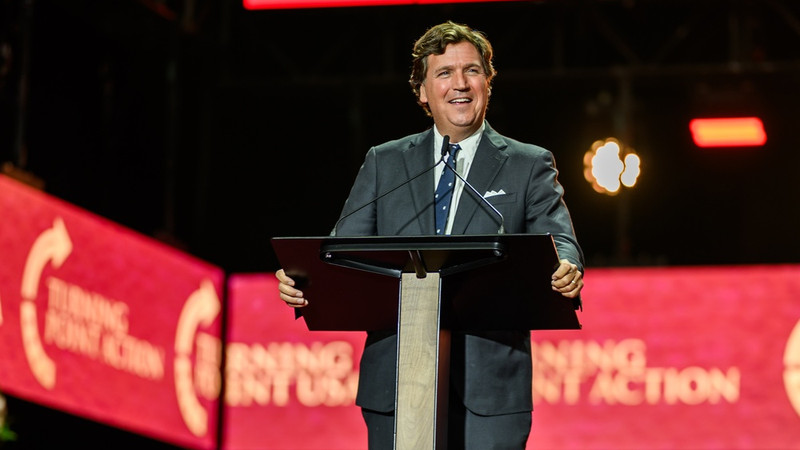
November 7 came and went. By November 17, Carlson was saying a long conversation with President Trump had convinced him the president wanted to de-escalate. Those two accounts are hard to square, and Carlson hasn't explained how he got from one to the other.
A warning about nuclear war needs evidence to match its weight. Conservatives have spent years demanding that standard from the press, and they should hold Carlson to it as well.
Carlson's long post on X opened with this sentence: "Under pressure from Israeli prime minister Benjamin Netanyahu, the Trump administration may be within days of launching a nuclear strike on Iran."
Critics should quote it exactly, "may" included. Carlson did not claim Trump had signed a launch order, and turning his warning into a flat prediction would give him an easy way out. The harder questions are about what he actually said: what evidence he had, why he judged a nuclear strike to be days away rather than merely conceivable, and what his audience should believe now.
Carlson's target was Pickaxe Mountain, a deeply buried site near Iran's Natanz enrichment complex, where he said Israeli intelligence believes Iran has restarted enrichment. Iran denies it. Carlson argued that no conventional American weapon could reach the tunnels, which left a nuclear strike as the only military option.
That doesn't follow. A target that is hard to destroy tells you something about the target, not about what the president has decided. The United States could contain the site, watch it, negotiate over it or strike it with narrower aims. Carlson's post jumped from a military problem to a claim about nuclear preparations without showing the step in between.
The sourcing was thin for a claim this large. His most specific line came from an unnamed "informed observer": "Bibi calls Trump about it every day." Daily calls from Netanyahu, if they happened, would show pressure. They would not show a nuclear decision.
There was also evidence pointing the other way. In an October 15 Newsmax interview, Trump said nuclear weapons weren't necessary against Iran and described a possible attack on Pickaxe Mountain in conventional terms, a point The War Zone noted in its coverage of Carlson's claim. A president's public statements don't settle what happens in private, but they have to be weighed, not waved off because the scarier story draws more attention.
The White House didn't help much. An official told The War Zone only that Trump had a range of options and would act to protect Americans. That answer deserved follow-up questions, but it did nothing to confirm Carlson's warning. Conservatives don't have to choose between trusting the administration boilerplate and trusting a commentator's worst case. Both deserve scrutiny.
There was a real fight over Iran policy, and it was reported. On November 1, Axios reported, citing one American and one Israeli official, that Netanyahu used a call with Trump on October 31 to push for renewed strikes immediately after the midterms, while Trump wanted more time for negotiations.
That was a significant story. It showed a foreign leader pushing for more combat and a president leaning toward diplomacy. It said nothing about preparations for a nuclear attack, and the distance between those two things is enormous.
Opponents of the war had every right to challenge its aims, costs, and risks, and they didn't need a nuclear scare to make the case. Adding one made their argument easier to dismiss, because defenders of the administration could brush off every legitimate concern by pointing to the most sensational claim. A critic who wants to be taken seriously shouldn't hand them that opening.
On November 17, in an interview with Brandon Weichert, Carlson described a recent long conversation with Trump. He said he came away convinced the president wanted to de-escalate and saw nothing to gain from going further.
That doesn't prove the earlier warning was knowingly false. Presidents change their minds, sources disagree, and a private conversation can turn up information that wasn't available before. But each of those is a different story, and Carlson owes his audience the one he can support. Maybe he learned his assessment was wrong, or maybe Trump changed course. A source may have overstated the odds, or Carlson may have presented a contingency plan as an imminent decision. His audience can't tell which, because he hasn't said.
A long talk with the president doesn't replace that accounting. It may improve what Carlson reports next, but it doesn't settle what he already published.
It also wouldn't be enough to suggest that public alarm stopped the strike. That claim would need evidence of its own. Without it, any missed prediction could be recast as a success, on the theory that the danger passed because someone warned about it. A warning that can never turn out wrong is a poor basis for trust.
The timing raised the stakes. Carlson's warning landed two days before Americans voted, from a commentator who had said in June that he would not support Republicans in the midterms. That does not prove he meant to sway the election. It does mean voters needed to know what was verified, what was informed speculation and what was guesswork, and his post didn't help them sort it out.
A commentator with an audience Carlson's size has real influence without any of the formal duties of office. What he owes in return is honesty about his work: say how certain he is, keep what his sources told him separate from what he concluded, and correct the record when the evidence changes. Conservatives should insist on that even from commentators they have often agreed with. Opposing an unnecessary war is an honorable position, and distrust of official assurances is often earned, but neither exempts anyone from basic questions about sourcing.
The fair charge against Carlson is narrow. Nobody has shown that he invented a launch order. He published an extraordinary nuclear warning that the available reporting never backed up, attached a deadline that passed without incident, and then described a president he believed wanted to de-escalate. He owes his audience an account of how he got from one to the other.
If he has corroborating evidence, he should share what he responsibly can. If his sources misled him, he should say so. If he overstated an uncertain possibility, he should correct it plainly. He asked Americans to take his warning seriously, and taking it seriously means asking him to back it up.
The national debt has skyrocketed in recent years and shows no signs of slowing down. This poses a real threat to Americans' retirement accounts for a multitude of reasons.
But you don't have to wait around and hope it gets fixed. You can protect your retirement today.
Augusta Precious Metals has crafted a 3-minute report titled, "Prepare Your Retirement Now: Debt Will Hit $40T in 2026". In it, you'll learn ways to take control of your financial future even as debt continues to balloon.
Get instant access to the report now: https://turley.pub/augusta_in-linead
© 2026 TurleyTalks.com. All rights reserved.
Gain the Clarity, Confidence, and Community you need to lead with courage and awaken a new conservative age. Join the movement to fight back and reclaim freedom at fight.turleytalks.com!
Turley Talks Coffee: Shop Bold Roast at https://turley.pub/TurleyTalksCoffee