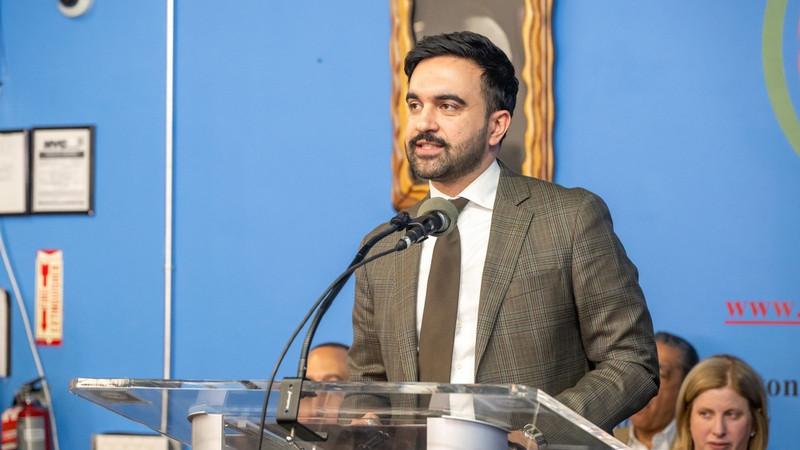
“We are disbanding the SRG,” the mayor declared on social media. It makes an effective political advertisement. Running the city after the ad ends will take considerably more explanation.
The plan separates the unit’s counterterrorism and protest duties, creates an unarmed civilian dialogue division and establishes new police teams for communication and crowd management. Mamdani is betting that this arrangement will protect civil liberties while preserving the department’s ability to maintain order. That is a claim to be tested, not an accomplishment announced in a press release.
For New Yorkers who need to reach work, keep a business open or get an ambulance through an intersection, the question is simple. When a demonstration crosses into intimidation, obstruction, or violence, will the city intervene promptly and lawfully?
There is nothing reactionary about asking. The mayor governs both the people who demonstrate and the people whose lives are disrupted by them. He owes obligations to both.
The details matter, not least because an exaggerated conservative response would let City Hall dodge the real argument. Mamdani has not announced the elimination of 500 police positions or the abandonment of counterterrorism. Commissioner Jessica Tisch says the roughly 500 SRG officers will be reassigned, some to the existing Counterterrorism Bureau. City Hall says overall NYPD headcount will not change and the restructuring will cost nothing extra.
Heavy-weapons protection at critical infrastructure will continue under the Intelligence and Counterterrorism Bureau. Conservatives should say so plainly. Claiming the mayor has left the city without a terrorism response would be inaccurate and politically self-defeating.
The more serious concern is the authority, readiness, and judgment of the replacement structure.
City Hall’s civilian Community Dialogue and De-escalation Division will have neither weapons nor arrest powers. A 30-officer First Amendment Support Team will handle communication, while a separate Patrol Support Division will keep an enforcement role and receive specialized crowd-management training. Comparing those 30 officers with the entire former SRG would be misleading. They are one component, not the whole replacement force.
Still, an important question remains: who decides when persuasion has failed and enforcement must begin?
An effective response depends on clear command, enough trained personnel and the ability to act before a volatile situation spirals. Dividing responsibilities among a mayoral office and several police units may improve coordination. It may also invite delay and buck-passing. New Yorkers deserve to know how the administration intends to prevent the latter.
The transition makes these questions more urgent. POLITICO reports that the civilian division will not be operational until 2028 at the earliest, leaving the police dialogue team to lead engagement in the meantime. Reuters reports that SRG officers will be reassigned before next spring. The mayor is celebrating a new approach whose advertised civilian centerpiece is well over a year away.
That gap is a practical problem that demands a public implementation plan. It deserves more attention than another congratulatory video.
Mamdani’s case begins with a proposition that should be uncontroversial: peaceful protesters should not be treated as terrorists. His announcement explicitly separates the city’s response to protected political activity from counterterrorism operations. The harder decisions come when a crowd contains peaceful demonstrators alongside people committing crimes. Officers must tell them apart without abandoning either the innocent protesters or the public outside the march.
The record of police failure here is real. New York City’s Department of Investigation concluded that the NYPD’s response to the 2020 protests involved excessive enforcement and tactics that often failed to distinguish lawful demonstrators from unlawful actors. A conservative commitment to constitutional government should have room for that finding.
A badge cannot turn an unlawful arrest into a lawful one. Public anger at rioting cannot excuse officers who strike people indiscriminately. Misconduct injures its immediate victims and erodes the public confidence officers need to do legitimate work.
Those principles do not establish, however, that dissolving this particular structure is the best remedy. That requires an argument about performance, supervision and operational capacity. The administration should explain which failures cannot be corrected within the existing structure and why the new one will prevent their recurrence.
Some of the reforms also predate Mamdani. A federal court approved an earlier protest-policing settlement in February 2024 that required a tiered response, de-escalation and limits on kettling. It also permitted a stronger police response when demonstrations threatened public safety, blocked major traffic arteries, or involved unlawful conduct.
The city was already obliged to reconcile protest rights with public order. Monday’s announcement should be judged against that obligation, not presented as though City Hall had just discovered restraint.
Mamdani’s directive prohibits kettling, tear gas and long guns during First Amendment activities, bars pepper spray as a general crowd-management tool and caps acoustic devices at 90 decibels. It also restricts the use of bicycles as weapons, except to prevent death or physical injury.
Specific restrictions can be justified, but they make clear operational guidance essential. Officers need to know which tools remain available against an actual assault, how a peaceful assembly is distinguished from developing disorder, and who authorizes a change in response. The public should not have to wait for a crisis to learn where those boundaries lie.
Tisch has endorsed the overhaul and says it will preserve the department’s ability to confront serious threats. Her support deserves weight. It also makes her responsible for showing that the safeguards are real.
The police union offers the opposite assessment. Police Benevolent Association President Patrick Hendry accused the mayor of risking public and officer safety to satisfy his political base. That is a warning from an interested party, not proof of what will happen, but it raises a concern the administration must answer with more than assurances about its intentions.
Parts of Mamdani’s own coalition are dissatisfied, too. The New York Civil Liberties Union welcomed the disbandment but worried that the new patrol unit could reproduce the old unit’s approach. The mayor is squeezed between people who fear too little enforcement and people who suspect meaningful enforcement will survive at all.
He cannot resolve that conflict by staying pleasantly ambiguous. Residents need a government willing to identify unlawful conduct and respond consistently, whatever cause is printed on the banner.
Mamdani also supports Councilmember Chi Ossé’s CURB Act, which would write major elements of the overhaul into law and restrict a future administration’s ability to reconstitute a similar unit.
Understand the forces shaping our civilization. Get CivCosm and uncover the ideas transforming our world. Order your copy today.
© 2026 TurleyTalks.com. All rights reserved.
Gain the Clarity, Confidence, and Community you need to lead with courage and awaken a new conservative age. Join the movement to fight back and reclaim freedom at fight.turleytalks.com!
Turley Talks Coffee: Shop Bold Roast at https://turley.pub/TurleyTalksCoffee