
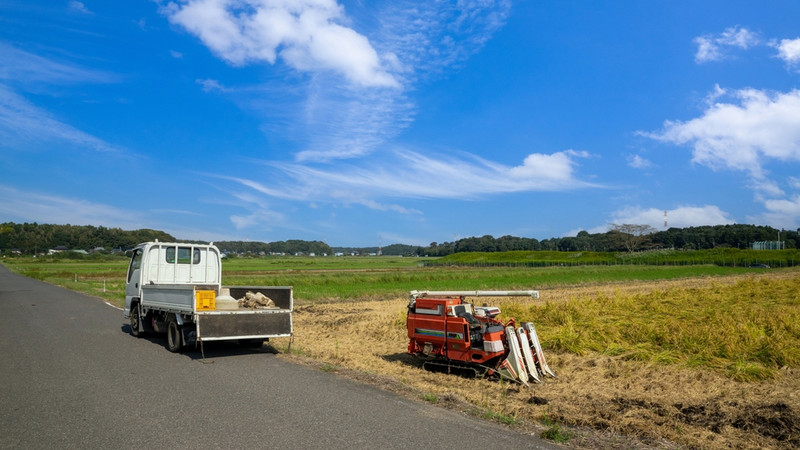
What if I told you that one of the most fascinating rebellions taking place in rural America isn’t roaring down the road in an enormous pickup but rattling across the countryside in a tiny Japanese truck that looks almost like a toy? Across the American landscape, farmers, contractors, homesteaders, and small-business owners are snapping up twenty-five-year-old Japanese mini-trucks. These quirky vehicles come with steering wheels on the "wrong" side, engines smaller than many motorcycles, and beds barely two feet off the ground. But this is about far more than an unusual automotive craze.
- Kei trucks, Japan's smallest class of four-wheel vehicles, are increasingly popular in rural America.
- These trucks offer a cost-effective, practical alternative to expensive American pickups.
- The trend highlights a cultural convergence, emphasizing independence and practical technology.
These little vehicles are called Kei trucks—Japan’s smallest class of four-wheel vehicle. In Japanese, "Kei" literally means ‘mini’ or ‘micro’. These trucks are no longer than about eleven feet, no wider than five, and feature engines no larger than 660 cubic centimeters. They were designed not as luxury items, but as working tools for Japan’s farms, construction sites, mountain roads, and villages. Now, they're finding an astonishing second life in America, particularly rural America. A Pennsylvania dealer told NHK—Japan’s equivalent of the BBC—that he imports fifteen to twenty Kei trucks monthly and has sold around three hundred in just three years. The typical truck costs between six and eight thousand dollars, gets roughly forty miles per gallon, and offers four-wheel drive. By contrast, a new American pickup can easily cost sixty thousand dollars, at least. Remarkably, the bed of a Kei truck can be about the same length as that of a massive heavy-duty Ram but sits around waist height, with all three sides folding down for easy loading.
These buyers are not merely collectors; they are farmers, contractors, landscapers, shopkeepers, and tradesmen. Here the story becomes much larger than the truck itself. For generations, the American pickup symbolized independence: a practical machine that a farmer, builder, or mechanic could use, understand, modify, and repair. However, the work truck has increasingly become a luxury product—larger, more computerized, more expensive, and more dependent on dealership servicing. Large pickups remain essential for towing, highway travel, and heavy payloads, but for simply carrying fence posts across a field, hauling feed between barns, or transporting tools down narrow orchard rows, bigger may simply mean more expensive.
The Kei truck reveals the difference between technology as a tool and technology as a system of dependency. It is small enough to fit the place, simple enough to repair, affordable enough to own, and adaptable enough to become whatever its owner needs. Some enthusiasts have even fitted them with tracks to cross snow and ice. This is technology on a human scale—machinery serving the family and farm rather than forcing them to reorganize around the machine.
There's a beautiful civilizational convergence taking place. The Kei truck emerged from Japan's own history of limits: limited postwar wealth, limited fuel, limited space, narrow roads, small farms, and mountainous terrain. But those limitations sparked extraordinary ingenuity. Japanese manufacturers learned to place maximum usefulness inside minimum dimensions. The result became integral to rural Japan—loading vegetables before sunrise, winding through rice paddies, and serving villages for decades. What did rural Americans see in it? They saw something profoundly familiar: thrift, durability, mechanical competence, independence, and respect for the land. In Japan, the Kei truck exemplifies disciplined ingenuity within limits; in America, it symbolizes the freedom to own, modify, and repair the tool yourself. These are distinct civilizational traditions, but they converge around a shared rural ethic: use what works, waste as little as possible, and never confuse ostentation with usefulness.
This story is conservative in the deepest sense. Conservatism is not opposition to technology; it is opposition to technologies that uproot people, destroy local knowledge, and make families dependent on systems they cannot control. Good technology strengthens inherited ways of life. The Kei truck represents what economist E. F. Schumacher called technology “with a human face”—proportioned to the person, task, and place. As noted by The Wall Street Journal
Yet, this human scale faces a regulatory battle. Federal rules generally permit foreign vehicles at least twenty-five years old to be imported without meeting current American safety standards, but each state decides whether they can be registered for public roads. The safety concerns are real; many older Kei trucks lack modern airbags and crash protection, and no one should mistake a farm vehicle for an interstate cruiser. However, sensible restrictions—local roads, inspections, insurance, and no interstate use—could protect the public without outlawing a useful machine. Owners are now calling legislators and winning new registration pathways state by state.
Amid this fight for independence and innovation, it's essential to recognize the broader cultural resurgence at play. Rural Americans are not waiting for a corporation or federal agency to define progress for them. They found a tool that serves their way of life, imported it, repaired it, modified it, and organized locally to defend it. This is not globalism, which standardizes everything. This is civilizational exchange: a machine born from Japan’s landscape finding a new home in rural America—exchange without erasure, cooperation without homogenization. The Kei truck emerged from constraint, yet it offered greater independence to ordinary people. American farmers recognize the same potential. They are not rejecting the future; they are rejecting a future that has forgotten its purpose.
If you want to understand the full significance of this movement and why America’s best days may still be ahead, consider exploring Dr. Steve Turley’s insights. In America Awakened, he reveals the political, cultural, and spiritual forces fueling a historic return to faith, family, and freedom. Discover it now!
Genuine progress does not always mean making everything bigger, costlier, and more complicated. Sometimes it means rediscovering the proper scale of things—making technology serve our families, communities, land, and traditions. That is why this tiny Japanese truck carries such an enormous message: it is a Japanese lesson, an American instinct, and perhaps a glimpse of the human-scale civilization now struggling to be reborn!
© 2026 TurleyTalks.com. All rights reserved.
Gain the Clarity, Confidence, and Community you need to lead with courage and awaken a new conservative age. Join the movement to fight back and reclaim freedom at fight.turleytalks.com!
