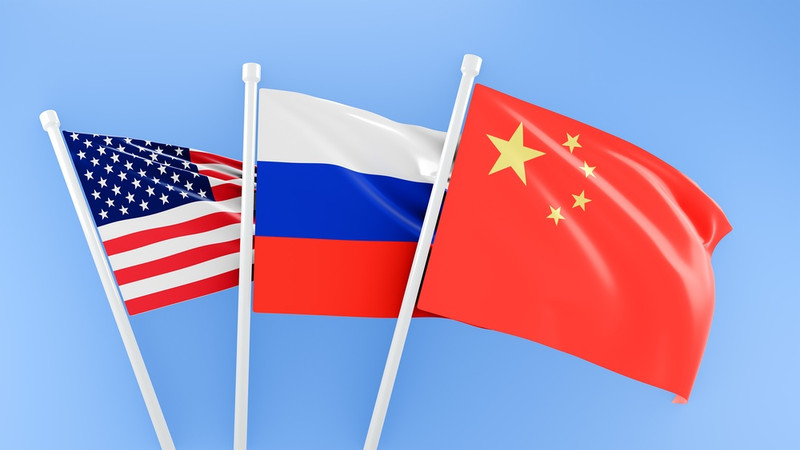
In a momentous gathering, three of the world's most influential leaders—Donald Trump, Xi Jinping, and Vladimir Putin—are converging in southern China. This unprecedented summit signals a shift away from the world order as we've known it. The leaders of the United States, China, and Russia have never before met as a trio in the entire history of these nations, and the implications are profound.
- The summit has been dubbed a "new Yalta," but it represents a deeper, more profound shift.
- This meeting marks the end of the post-Cold War global consensus, ushering in a new era of multipolarity.
As I report from Tokyo, Japan, just a stone's throw from Shenzhen, the anticipation here is palpable. The summit feels like a storm gathering strength, transforming into a significant, global event. Xi Jinping broke diplomatic protocol by personally greeting Donald Trump at the airport, an act underscoring the seismic shifts at play. Meanwhile, Vladimir Putin met Trump later at a formal banquet, highlighting the unique dynamics between these leaders.
Before Trump's arrival, Xi and Putin had already met multiple times, underscoring their commitment to establishing a "multipolar world." This vision involves distinct civilizational spheres: Orthodox Russia, Confucian China, Hindu India, Ottoman Turkey, and Manifest Destiny America. The White House suggests no grand treaty will emerge, but rather a new geopolitical worldview, a cosmovision that even extends to astropolitics.
In this changing landscape, it’s crucial for patriots to stand united. The Patriot Economy is growing—are you part of it? Get yours today! Every purchase supports aligned values and strengthens the movement.
From Moscow, Dmitri Trenin of the Russian International Affairs Council sees this meeting as a defining moment, emphasizing the representation of three distinct civilizations: Chinese, American, and Russian. He even suggests that India might join this powerful circle as a "civilization-state." Dmitry Suslov from Moscow's Higher School of Economics points out that previous multipolar orders were European-centric, but this new order is "poly-civilizational," blending Western and Eastern, Northern and Southern influences poly-civilizational influences.
In Beijing, Wang Wen from Renmin University frames this as the birth of the "Shenzhen International System," moving beyond Yalta's ideological lines to focus on civilizational identity. This shift from ideology to identity aligns with China's longstanding emphasis on its Global Civilization Initiative. In this new world, civilizations grow like trees in a garden, with China positioning itself as the tallest tree.
Meanwhile, Washington is adopting similar civilizational language. The 2025 National Security Strategy warns of Europe's potential "civilizational erasure" due to open-border globalist policies. The U.S. is increasingly prioritizing its Western Hemisphere and supporting nationalist populist parties in Europe. This marks a shift towards defining American interests through a civilizational lens, emphasizing a Western, Christian bloc.
.In essence, Moscow, Beijing, and Washington are all speaking the language of civilizations. The post-Cold War dream of a universal global order is fading. Instead, we see the rise of distinct civilization-based spheres of influence. Shenzhen marks the moment the old narrative ended, and a new chapter began. Samuel Huntington's once-debated "clash of civilizations" is now the reality guiding the world's most powerful governments.
© 2026 TurleyTalks.com. All rights reserved.
Gain the Clarity, Confidence, and Community you need to lead with courage and awaken a new conservative age. Join the movement to fight back and reclaim freedom at fight.turleytalks.com!
Turley Talks Coffee: Shop Bold Roast at https://turley.pub/TurleyTalksCoffee