
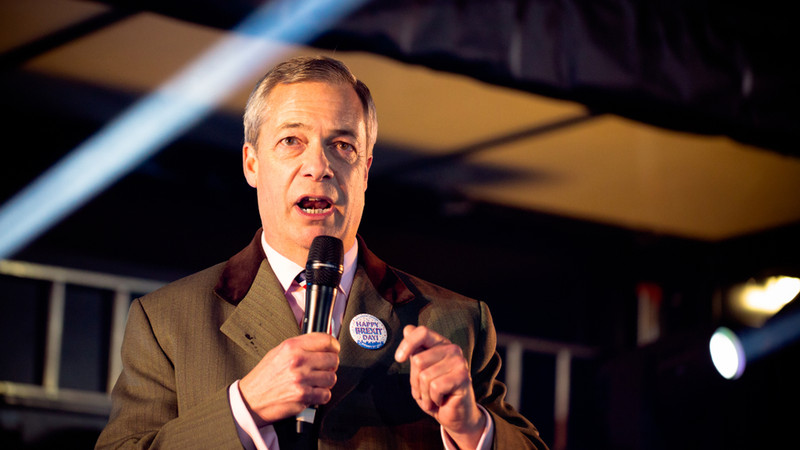
The British Labour government is spiraling into chaos. The recent local elections across the UK delivered not just a bad night for Keir Starmer—they sent shockwaves through the entire British establishment. And since that political earthquake, Starmer's cabinet has been falling apart, with resignations coming one after another. The man who once secured one of the largest parliamentary majorities in modern British history is now barricaded inside Number 10 Downing Street, refusing to speak even to his ministers, while over 90 of his own MPs are poised to oust him. This is no ordinary political drama; it's a spectacular political implosion happening live, in real-time.
- The UK Labour government is in freefall as Starmer's cabinet crumbles amid mass resignations.
- Reform UK, led by Nigel Farage, has made massive electoral gains, signaling a seismic political shift.
- Labour's loss is not just about Starmer but the party's failure to connect with traditional working-class voters.
What's unfolding in Britain is more than just the downfall of a prime minister; it's a tale of a government losing the consent of its people. When the electorate sends such a loud, clear message, even the party in power can't pretend not to hear it. On May 7th, British voters took to the polls for local council elections across England, which function much like our midterms—a referendum on the ruling party. This was no mere protest vote; it was a political revolution at the ballot box. Enter Reform UK—Nigel Farage's so-called far-right party—which clinched over 1,400 council seats across England, seizing control of eight full councils. Sky News projected that, if a general election were held today, Reform UK would likely become the largest party in the country. For Labour, it was a bloodbath; they lost over 1,300 seats—more than 80% of their holdings—and 35 councils overnight. Labour's traditional strongholds in the North and Midlands also collapsed, with places like Tamworth witnessing a complete sweep by Reform UK.
These are Labour's historical voters—working-class communities who have supported the party for over a century. They didn't just stay home or choose another party; they crossed the street and voted for the so-called "far right." It's a scenario reminiscent of 2016 in the U.S., when deep blue working-class counties shifted to Trump, swinging away from the establishment left to a nationalist populist candidate. This is the same Brexit realignment that saw districts voting Labour for decades vehemently wanting out of the EU, culminating in Boris Johnson's landslide victory in December 2019 as he promised to "get Brexit done."
However, after squandering their opportunity and betraying their working-class voters, the Tories opened the door for Labour's return. Yet, Keir Starmer's lackluster leadership has driven these voters back to Reform UK. One would expect a prime minister, in the face of such calamity, to regroup with his cabinet, but Starmer took a different route. On Tuesday morning, Starmer assembled his cabinet only to ban any discussion of leadership. He read a prepared statement declaring he would not resign and then exited abruptly, leaving his ministers in the lurch. Health Secretary Wes Streeting and others were left bewildered as Starmer locked himself inside Downing Street, cutting communications and sending surrogates to claim everything was fine. This is not leadership; this is a complete unraveling.
As we witness this political collapse, it's essential to be prepared for our own emergencies. When disaster strikes, access to clean water is crucial. Don’t wait until it's too late; get your Pure Water Straw here. This portable solution will ensure you have safe drinking water anywhere, anytime.
The resignations began with Miatta Fahnbulleh, Minister for Devolution, Faith, and Communities. By midday, Jess Phillips, the Safeguarding Minister, had resigned, criticizing the government's failure to enact meaningful change for women and girls. She noted that being a "good man" is not enough. Then, Alex Davies-Jones, Minister for Victims and Violence Against Women, resigned, calling the electoral losses "catastrophic" and urging Starmer to set a timeline for his exit. Dr. Zubir Ahmed, a health minister, followed suit, deeming Starmer's position "wholly untenable."
By Tuesday evening, over 80 Labour MPs—nearly a quarter of Starmer's parliamentary party—had publicly demanded his resignation. That number rose to 91 by nightfall, surpassing the threshold needed to trigger a formal leadership challenge. The breaking point came when Wes Streeting, the Health Secretary, held a brief meeting with Starmer. Although the contents remain private, Streeting's subsequent resignation letter was damning, asserting that Starmer could not lead Labour into the next general election. He criticized policy missteps and a leadership style that left the public uncertain of the party's identity. Crucially, Streeting did not declare his candidacy for leadership, instead urging Starmer to step down and allow a real contest to take place.
The bottom line is this: Keir Starmer's downfall is not just about a leader losing his grip on power; it's about a party that misrepresented itself to the electorate. Labour's 2024 majority wasn't a mandate but a rejection of the Tories. Reform UK, however, is stepping in to fill the void, much like Trump did in America—speaking to the ignored and winning because, in the end, truth prevails.
Starmer may barricade himself in Downing Street, avoiding questions and sending surrogates to claim all is well. But with 91 MPs against him, his Health Secretary gone, and multiple ministers resigning in one day, the writing is on the wall. Town after town across England has voted for change. Starmer might not leave today or this week, but rest assured, his departure is inevitable.
© 2025 TurleyTalks.com. All rights reserved.
Gain the Clarity, Confidence, and Community you need to lead with courage and awaken a new conservative age. Join the movement to fight back and reclaim freedom at fight.turleytalks.com!
