
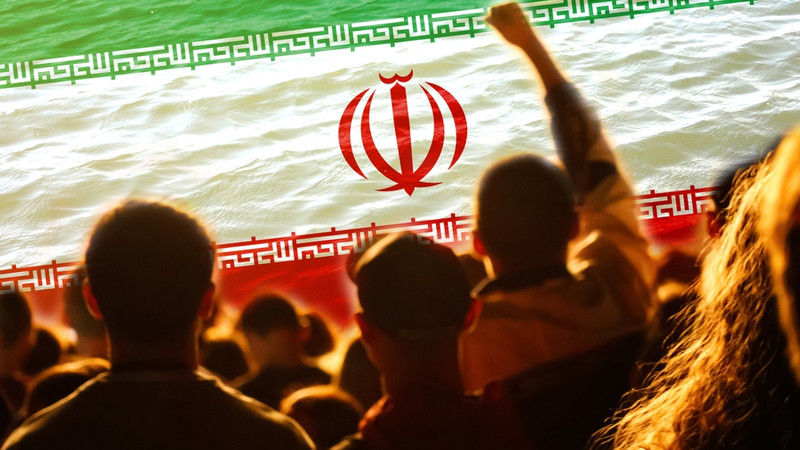
Iran is on the brink of a monumental upheaval. Across the nation, a wave of unrest is challenging Tehran's authority both at home and abroad, threatening to dismantle its revolutionary stronghold in the Middle East. The internal strife is merging with regional tensions, signaling a potential collapse of Iran's regime.
- On September 16th, Iranians marked the anniversary of Mahsa Amini's death, igniting a new wave of protests against the regime.
- The powerful merchant class in Iran, historically influential in political shifts, has once again closed shops in protest, echoing their role in the 1979 revolution.
- Tehran's regional power is crumbling as its proxy networks face severe setbacks across the Middle East.
September 16th marks a pivotal moment in Iran's ongoing struggle against its authoritarian regime. Four years ago, Mahsa Amini's tragic death at the hands of Iran's morality police for allegedly violating hijab laws sparked widespread outrage, particularly among the Kurdish population. Her death led to mass protests, with women burning headscarves, students walking out, and merchants closing their doors. This wasn't merely a call for reform; it was a demand for the Islamic Republic's end. The regime's response was brutal and unforgiving, with over 500 deaths and more than 20,000 detentions. Yet, their harsh tactics failed to quell the unrest, which has now resurfaced on the anniversary of Amini's death.
In a remarkable show of unity, six Iranian Kurdish opposition parties, typically divided by ideology and rivalry, have banded together to call for a general strike. This call to action has resonated across Saqqez, Amini's hometown, and other cities in western Iran, where markets have shuttered in defiance of the regime. The presence of security forces underscores the government's fear of losing control over another mass uprising.
The Iranian merchant class, known as the bazaaris, plays a crucial role in these protests. Historically, they have been the economic backbone of Iran and were instrumental in toppling the Shah in 1979 by closing their businesses in protest. When the Grand Bazaar in Tehran shuts down, it symbolizes not just economic paralysis but also the loss of business-class confidence in the regime. This mirrors the events of last December, which led to mass uprisings and a brutal governmental response in January, acknowledged by Iran's Supreme National Security Council to have resulted in over 3,000 deaths. Observers from the UN and Amnesty International reported even higher figures, marking it as one of the deadliest periods of repression in Iran's recent history.
In the face of such crises, one cannot underestimate the importance of being prepared. As the Iranian people stand united against tyranny, ensure you are ready for any eventuality. Get your Pure Water Straw here.This portable solution for clean water can turn lakes, streams, or floodwater into safe drinking water in seconds, making it an essential tool for any emergency.
Externally, Tehran’s influence is waning as its proxy model across the Middle East faces structural degradation. Iran's network of proxies, which includes Hezbollah in Lebanon, Palestinian factions, militias in Iraq, the Assad regime in Syria, and the Houthis in Yemen, is faltering. Hezbollah is experiencing leadership and military losses, the Syrian corridor to Lebanon has been severed, and Hamas has emerged weakened from years of conflict. Iranian-aligned factions in Iraq are prioritizing survival over Tehran’s agenda.
The Houthis, Iran's fiercest remaining allies, still pose a threat with their control over Sanaa and Yemen's northwest. Their recent attacks on Saudi Arabia, including an audacious strike near Mecca, highlight their aggression. However, the attack on Mecca, whether intentional or not, has incited significant backlash and could further isolate Tehran from the Sunni world. With Islam being predominantly Sunni, this misstep by the Shiite Houthis is a public relations disaster, potentially turning a regional struggle into a civilizational confrontation.
Iran's regime, once bolstered by a revolutionary ethos and a robust proxy network, now faces the repercussions of its own policies. The unrest inside Iran, combined with the degradation of its regional power, suggests that the Islamic Republic is encircled by the very consequences it sought to avoid. As the Iranian people continue to voice their dissatisfaction, the critical question remains: will these converging pressures lead to a point of no return for the regime?
© 2026 TurleyTalks.com. All rights reserved.
Gain the Clarity, Confidence, and Community you need to lead with courage and awaken a new conservative age. Join the movement to fight back and reclaim freedom at fight.turleytalks.com!
