
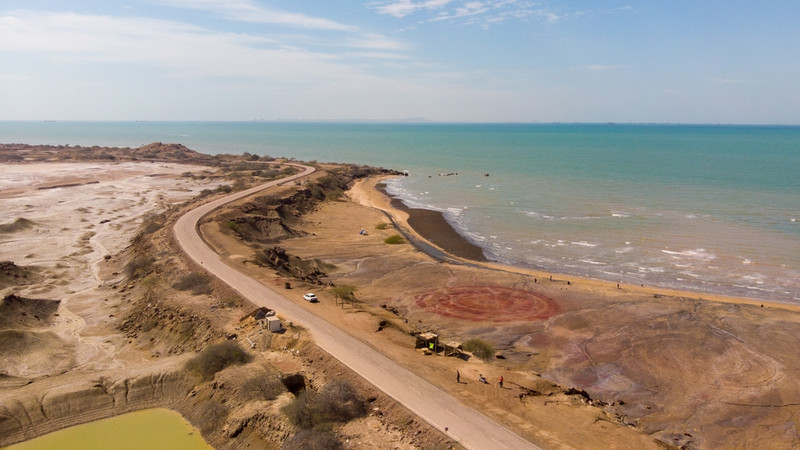
In a stunning about-face, Western European nations have joined forces with the United States in a coalition aimed at ensuring the safe passage through the Strait of Hormuz. This development marks a significant geopolitical shift, with Europe stepping up to the plate in response to President Trump's call for unity. Even more intriguing is the ambitious plan to construct the Musandam Canal, a project that could render the Hormuz choke point obsolete and reshape global energy routes for the future.
- European nations unexpectedly align with the U.S. to form the Hormuz Coalition.
- The Musandam Canal proposal offers a strategic bypass to the Strait of Hormuz.
- The coalition and canal project signify a transformative shift in Middle Eastern geopolitics.
To appreciate the magnitude of this reversal, we must look back just a few days. Previously, European nations like Germany, France, and Britain dismissed President Trump's plea for support, claiming the situation was not their war. Yet, as oil prices soared past $105 a barrel and gasoline prices in London spiked to $8 a gallon, circumstances changed. Trump reminded Europe that they relied heavily on the Strait of Hormuz, receiving 10% of their oil via this critical passageway, far more than the U.S.
Faced with this stark reality, European nations could no longer turn a blind eye. Trump's critique of NATO as outdated and overly dependent on American defense spending has been consistent. He used this moment to challenge NATO's relevance and urged them to prove their commitment. The European response was initially dismissive, but Trump's strategic patience paid off. His warnings about NATO’s future were not threats but acknowledgments of an alliance in need of reform.
As a result, six U.S. allies, including the UK, France, and Germany, issued a joint statement capitulating to Trump's pressure. The UK swiftly deployed warships to the region, demonstrating a serious commitment to the coalition. This coalition, while nascent, signifies a shift in the geopolitical landscape with Europe acknowledging their stake in the security of global oil routes.
Enter the Musandam Canal, a groundbreaking proposal that could fundamentally alter global energy logistics. The Strait of Hormuz, a narrow passageway through which nearly 20% of the world's oil supply travels, has long been a point of vulnerability. Iran's threats to close the strait have demonstrated the fragility of this corridor. The Musandam Canal, envisioned as a 90-kilometer channel across Oman's Musandam Peninsula, would allow tankers to bypass the Strait of Hormuz entirely, sailing directly into the open Arabian Sea.
While we look towards these ambitious projects, it's crucial to also consider personal preparedness in uncertain times. Just as nations are strategizing for geopolitical stability, you can secure your own safety. When disaster strikes, help might not come right away; this tiny orange bag could be the lifeline that keeps you warm, dry, and alive. Lightweight, waterproof, and designed for extreme conditions, this little orange bag is your backup plan when disaster strikes.
**Grab your Emergency Sleeping Bag here.**
This ambitious project faces significant challenges, including mountainous terrain and high costs estimated between $100 billion and $400 billion. It would also require substantial military protection against potential threats from Iran. Yet, the notion of a bypass has gained traction amid the current crisis, with several Gulf countries exploring this strategic alternative.
The unfolding events underscore a new political and economic order in the Middle East. With Iran's influence waning and the Abraham Coalition providing regional stability, the timing is ripe for such transformative infrastructure projects. The Hormuz Coalition secures the strait for now, while the Musandam Canal could permanently eliminate the choke point's strategic importance. In essence, this marks a civilizational shift, where the arteries of global trade are being reimagined for a new era. The Hormuz blockade may soon be a relic of the past, as strategic foresight and international collaboration pave the way for a more secure future.
© 2025 TurleyTalks.com. All rights reserved.
Gain the Clarity, Confidence, and Community you need to lead with courage and awaken a new conservative age. Join the movement to fight back and reclaim freedom at fight.turleytalks.com!

