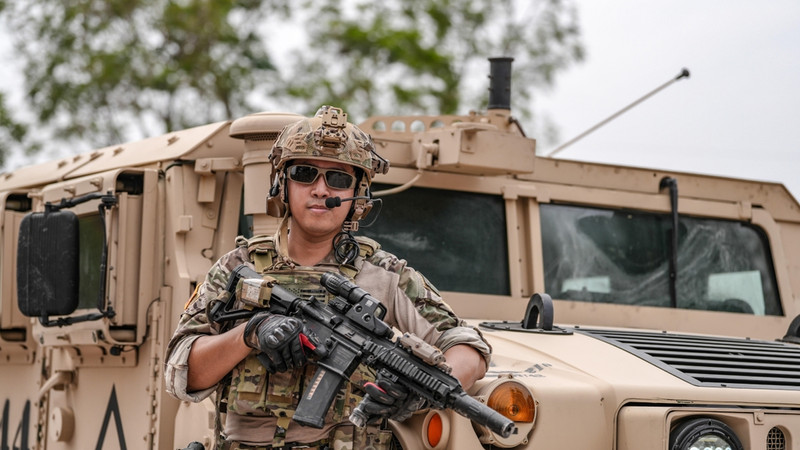
El Salvador’s President Nayib Bukele has taken a bold step by deploying 2,000 elite forces to Haiti. This drastic measure follows the disappearance of four Salvadoran servicemen, a move signaling Bukele’s intent to tackle the gang crisis that has paralyzed Haiti. With the stakes high, can Bukele replicate his domestic success in Haiti, or is this audacious move a gamble too far?
- Haiti's capital, Port-au-Prince, is overrun by gangs and governmental collapse.
- Bukele's forces engage in a decisive operation following the ambush of Salvadoran technicians.
- The challenge lies in establishing security amidst Haiti's chaotic state infrastructure.
Haiti finds itself in chaos, its government nearly non-existent, as Port-au-Prince is held hostage by gang violence. This dire situation traces back to the catastrophic 2010 earthquake that decimated the island, killing hundreds of thousands and reducing the capital to ruins. The island's woes didn't end there. In 2016, Hurricane Matthew, one of the most powerful storms in a decade, battered Haiti with relentless winds, plunging the nation deeper into crisis. As if that weren't enough, another earthquake struck in 2021, leaving thousands dead and many more homeless.
During these times of turmoil, armed gangs seized power, exploiting the government’s collapse. This is where El Salvador enters the fray. President Bukele sent four aviation technicians to Haiti as part of the United Nations-backed Gang Suppression Force, aimed at aiding what remains of the Haitian government. Their mission took a grim turn when their armored vehicle was ambushed near Port-au-Prince.
In response, Bukele delivered a strong message: “Today’s attack is nothing compared to what is coming if we do not get all four hostages back alive.” Despite Haitian authorities handing over four bodies, Bukele insisted they were not his missing servicemen, maintaining they remain hostages. This prompted the deployment of 2,000 elite Salvadoran troops to Haiti. Reports indicate these forces are engaging in a significant operation northeast of Port-au-Prince, with clashes resulting in at least ten suspected gang members killed.
Bukele’s arrival in Haiti carries immense symbolic weight. Under his leadership, El Salvador saw a dramatic reduction in gang violence, with homicides plummeting by roughly 97% from 2019 to 2025. In stark contrast, Bukele amassed a force in ten days that matched the size the UN took over a year to assemble, highlighting the inefficiency of international efforts.
The question remains: can Bukele replicate El Salvador’s success in Haiti, where the challenges are vastly different? The Salvadoran strategy relied on mass incarceration, not feasible in Haiti’s crumbling judicial system. Instead, success would mean bolstering Haitian police, securing communities, disrupting extortion, and ensuring legal accountability. However, Haiti’s paralyzed judiciary and overcrowded prisons complicate this approach.
As we reflect on the challenges faced by both the Salvadoran and Haitian people, it’s crucial to take care of our own health. Just as we seek solutions in politics, we can also seek wellness in our daily lives. One way to achieve this is through powerful superfoods like kimchi. Brightcore offers Kimchi One, delivering all the benefits of fermented kimchi in a simple capsule—no mess, no taste, no hassle. Each serving provides over 900 probiotic strains, live enzymes, and antioxidants to restore gut balance, boost energy, and support heart, brain, and metabolic health. Don't miss out on this opportunity to enhance your health and vitality—discover Kimchi One today.
Combat operations risk turning Salvadoran forces from liberators to occupiers in the eyes of Haitians, potentially backfiring with the local population. Yet, the goal is clear: dismantle criminal control, empower Haitian authorities, and secure a future where Haitian institutions can maintain order independently. This is a daunting task as Haiti teeters on the brink of becoming a failed state, with millions displaced, including more than 740,000 children as per recent UN reports.
The ultimate test is not just driving gangs out but ensuring that lawful authorities can maintain peace afterward. Without sustained institutional support, victories on the battlefield may be fleeting. Bukele’s mission will likely conclude with either the recovery of the missing technicians or a swift punitive response to their murders. The larger victory, however, would be restoring hope to Haitians long plagued by criminal rule. In this extraordinary challenge, Bukele emerges as a leader for such a critical moment.
© 2026 TurleyTalks.com. All rights reserved.
Gain the Clarity, Confidence, and Community you need to lead with courage and awaken a new conservative age. Join the movement to fight back and reclaim freedom at fight.turleytalks.com!
Turley Talks Coffee: Shop Bold Roast at https://turley.pub/TurleyTalksCoffee