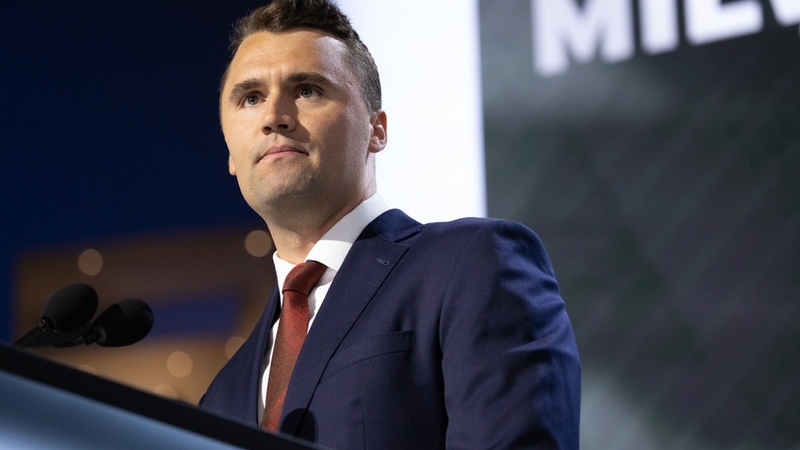
The recent episode of Bill Maher's *Club Random* featuring conservative activist Charlie Kirk spurred significant discussion, but perhaps missed a fundamental point regarding the nature of religion and morality. Amidst Maher facing criticism from fellow liberals for his dinner with President Trump, the conversation turned to the Ten Commandments. Herein lies a glaring oversight—both Maher and Kirk failed to address the essence of what religion fundamentally represents.
- Bill Maher's view reduces religion to a mere social construct, ignoring its integral role in maintaining social order.
- A critical distinction exists between personal beliefs and the broader societal function of religion, which can provide the source of moral obligation. This is echoed in Thomas Sowell's thoughts.
- The founding principles of America, rooted in the belief that a virtuous society relies on religion, stand in stark contrast to Maher's dismissal of religious values.
Maher’s assumption—that society can thrive without religion—overlooks a century of anthropological evidence indicating that the sacred is what unites humans within a social order. Religion is not merely an add-on to society; it fundamentally constitutes it. Cultural anthropologists have long argued that the sacred comprises timeless myths and narratives that foster unity and provide foundations for social norms. They define religion as what re-binds social obligations—not epitaphs confined to personal convictions or superficial critiques often employed by Maher.
The concept of "religion" finds its roots in the Latin term *re-ligare*, meaning “to re-tie,” suggesting that any community relies upon certain absolute ideas that serve to bind its members together ([Greg Trimble's insight](https://www.gregtrimble.com/meaning-of-the-word-religion/)). Misunderstanding this, Maher’s definition paints religion as something that could exist outside of necessity, yet this fundamentally misses the point. As he attempts to critique belief systems he sees as unfounded, he unwittingly dismantles the very elements that comprise a cohesive and functioning society.
Further complicating the discussion, Kirk’s approach to the Ten Commandments, as he suggested separating the moral obligations from the theological, inadvertently reinforces the confusion. The truth remains: moral prescripts cannot exist devoid of a sacred source. Maher’s liberal framework operates with an unacknowledged sacredness of its own—treating common sense as an almost deity in its own right. The absurdity of writing off crucial moral principles as mere common sense signifies a deeper misunderstanding of moral underpinnings.
This discrepancy, of interpreting truth, illustrates the bifurcation between "word to world" understanding and "world to word" creation, where language and declarations manifest realities rather than strictly reflect pre-existing truths. Texts such as "I now pronounce you husband and wife" underscore this transformative power of language when validated by the sacred authority behind those utterances.
Bill Maher’s liberalism thrives on dismissing the rich religious tapestry woven into the foundation of American governance. The founders understood civic virtue as pivotal for self-governance, recognizing the necessity of a classical religious tradition to cultivate virtuous societies capable of sustaining ordered liberty. Maher's atheistic leanings contradict the very tenets that inspired the framework of governance in America.
Discussions around religion and morality demand an understanding of the intrinsic role the sacred plays in cultivating a vibrant culture. The need to move beyond the outdated dichotomies of reason versus faith or science against religion remains paramount as society experiences a significant resurgence of religious fervor. The hope exists that future conversations between figures like Maher and Kirk may embrace these pivotal truths, cultivating a more insightful dialogue on the essential role of religion in the context of societal flourishing.
Amidst the rising tide of nationalism and a cultural renaissance, recognizing the union of religion with societal structure will prove essential for navigating the complexities of contemporary life. Understanding that every society inherently possesses a religion, the focus shifts back to which beliefs will define the future of civilization, challenging prevailing notions and fostering a path toward cultural restoration.
Copyright, 2025. TurleyTalks.com
Our new Turley Talks app is our very own platform that can never, ever be canceled! This app is our way to declare our independence from all woke platforms that hate conservatives and have tried to cancel and demonetize Dr. Steve. You can download it completely free today by going to fight.turleytalks.com!