
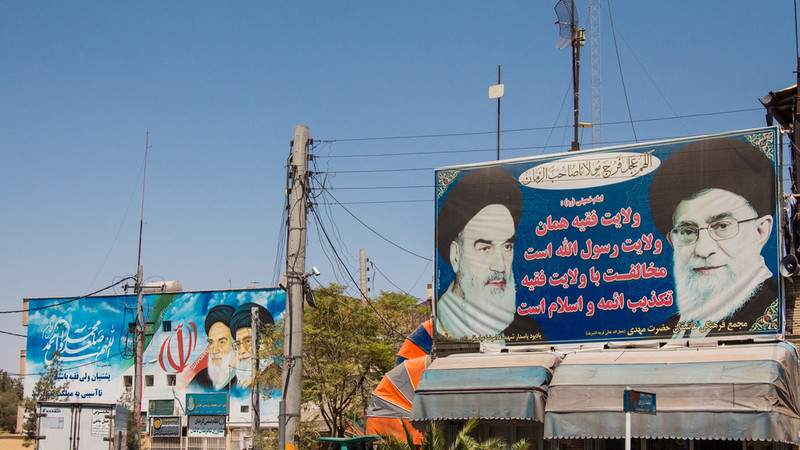
A seismic shift is occurring in Iran, where a revolution is threatening to reshape the Middle East. This isn't just a political or economic upheaval—it's a battle for survival. The Islamic Republic, which seized power in the late 1970s, is crumbling under its own crisis, and an exiled Crown Prince has issued a rallying cry that has the mullahs trembling.
- Iran is in the throes of a massive uprising, the largest since 2022, ignited by economic collapse and water shortages.
- The exiled Crown Prince Reza Pahlavi has called for action, reigniting monarchist sentiments among Iranians.
- Iran's Supreme Leader Khamenei reportedly has a contingency plan to flee to Moscow if the protests cannot be controlled.
Forty-six years ago, revolution swept through Tehran, led by Shiite scholar Ruhollah Khomeini, forever altering the Middle East. Today, a new revolution is underway. While the 1979 revolution chanted "Death to the Shah," today's rallies across Iran shout "Death to the Dictator!" Since December 28th, over 100 cities have erupted in the nation's largest unrest since 2022. At least 31 protesters have been killed by security forces using live ammunition. Students, shopkeepers, and farmers are flooding the streets.
There are two main catalysts behind these protests. At one level, Iranians are revolting against a catastrophic economic collapse that has rendered daily life unbearable. The immediate spark was the rial's crash to 1.42 million per dollar in late December, losing 60% of its value in six months. This currency collapse triggered inflation rates between 42% and 72%, with food prices more than doubling, making meat a luxury. The crisis is fueled by crippling UN and US sanctions, the costly war with Israel, chronic government mismanagement, and prioritizing foreign militias over domestic needs. Yet, none of these issues compare to the existential crisis of their catastrophic water shortage.
Tehran's reservoirs are at just 12% capacity, and 20 provinces are suffering the worst drought in over 40 years. President Pezeshkian warned in November that Iran might need to evacuate its capital of 10 million people. Imagine that—a country with some of the largest oil reserves can't provide water to its own capital. Iran is approaching "water bankruptcy," with aquifers collapsing permanently and regions becoming uninhabitable. Decades of mismanagement are to blame. The regime built massive dams on unsustainable rivers, drilled over a million wells draining ancient aquifers, and funneled billions into arming Hezbollah and Hamas while neglecting infrastructure.
Water protests in Khuzestan Province turned deadly in 2021 when security forces fired on demonstrators. Fast forward to late December, and the economic pressure finally burst. The rial lost 60% of its value, and food prices soared 72% in one year. Merchants of the Grand Bazaar, vital in overthrowing the Shah in 1979, closed their shops and joined the protests. Within 48 hours, demonstrations spread nationwide. Students tore down Supreme Leader Khamenei's posters at universities while crowds blocked highways. The regime responded with tear gas and bullets, yet the protests only grow larger by the hour.
This unrest isn't driven by economics alone. The exiled Crown Prince Reza Pahlavi, son of the last Shah, is a new voice in the chaos. For 46 years, the Islamic Republic has tried to erase the Pahlavi legacy, where mentioning the Shah favorably could lead to arrest. On January 2nd, Pahlavi issued instructions to protesters, calling for millions to flood the streets, create roadblocks, and thanked President Trump for his support. Amazingly, it's working. Protesters now chant "Long Live the Shah"—a phrase unthinkable weeks ago. The Lion and Sun flag, banned since 1979, is being waved in demonstrations across Iran.
This movement represents a profound rejection of the Islamic Republic and a return to Iran’s civilizational identity. Many see this monarchist turn as a civilizational immune response, rejecting an ideological state that nearly destroyed the legacy of Persian civilization. Iranians recognize that civilizational continuity requires material sustainability, not ideological purity. The founder of the Pahlavi dynasty, Reza Shah, chose the name "Pahlavi" to connect with the pre-Islamic Persian golden age, asserting a legacy from the early 20th century that he was a legitimate heir to the Sassanian Empire.
As we witness these extraordinary events unfold in Iran, we are seeing the latest chapter in a rising civilizationalist world. This revolution may well redefine the future of Iran and the Middle East.
In light of the economic uncertainties we face, it's crucial to take control of your financial future. You don't have to wait around and hope things get better. Protect your retirement today by accessing Augusta Precious Metals' report titled, "Prepare Your Retirement Now: Debt Will Hit $40T in 2026." In just three minutes, you can learn how to safeguard your investments even as national debt continues to rise. Get instant access to the report now!
© 2025 TurleyTalks.com. All rights reserved.
Gain the Clarity, Confidence, and Community you need to lead with courage and awaken a new conservative age. Join the movement to fight back and reclaim freedom at fight.turleytalks.com!