
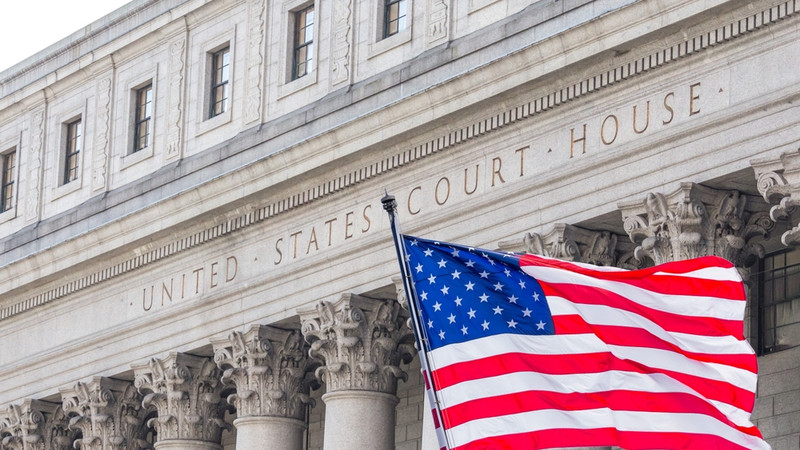
The Supreme Court has delivered a monumental ruling that could redefine American politics as we know it. In a landmark decision that goes beyond merely reshaping Louisiana's congressional map, the court’s ruling is set to trigger a redistricting tsunami across all fifty states. This seismic shift promises to alter the very fabric of our nation forever.
- The Supreme Court’s decision dismantles decades of Democrat-led racial gerrymandering practices.
- A 6-3 ruling struck down Louisiana's race-based districting, rewriting how race can influence congressional maps.
- Justice Ketanji Brown Jackson’s dissent faced fierce rebuttals, highlighting internal court divisions.
The Callais ruling marks a historic blow against the long-standing Democrat strategy of manipulating congressional districts under the guise of preventing vote dilution. For decades, Democrats have redrawn maps to ensure a Democrat majority by concentrating minority voters in specific districts, effectively marginalizing white voters. However, Louisiana's latest attempt at such race-based redistricting was quashed by the Supreme Court in a decisive 6-3 vote. The conservative majority, through this ruling, has fundamentally altered the rules surrounding race in congressional mapping.
Naturally, the radical left is in an uproar, realizing that their tactic of coercing red states into gerrymandering for guaranteed Democrat seats has met its demise. Yet, the full implications of this ruling seem to elude them. Hours after the ruling, on May 4th, the Court issued an order allowing the Callais decision to take immediate effect, bypassing the usual 32-day waiting period. This was crucial, as Louisiana's congressional primary had already been postponed by Governor Jeff Landry to allow for the creation of new maps. The Court’s decision to expedite the process ensures unconstitutional districts won't influence upcoming elections.
As we navigate this pivotal moment in American history, it’s essential to be prepared for any disruptions that may arise. Grab your Emergency Sleeping Bag here.nThis lightweight, waterproof bag could be your lifeline when disaster strikes, keeping you warm, dry, and alive.
Justice Ketanji Brown Jackson, in a solitary dissent, decried the Court's order, accusing the conservative majority of sowing chaos and pursuing power over principle. Her dissent, unsupported by even the other liberal justices, claimed that waiving the waiting period was a political maneuver to interfere with the midterms. Yet, this argument fell flat as even liberal justices agreed with the expedited enforcement, acknowledging that the unconstitutional districts could not stand.
Justice Samuel Alito, joined by Justices Clarence Thomas and Neil Gorsuch, responded robustly to Jackson's charges. He boldly labeled her claims as "baseless and insulting," highlighting the absurdity of her partisan accusations. Alito underscored the contradiction in Jackson’s stance, noting that her desire to maintain unconstitutional districts itself smacked of partisanship.
The Callais decision is a game-changer, as it dismantles the structural tactics Democrats have relied on for decades. Reuters has acknowledged the political earthquake this ruling represents, signaling a potential end to the Democrats' viability as a party. The decision has uprooted the racial gerrymandering strategy that has been a cornerstone of their electoral architecture, built over forty years.
Ballotpedia's analysis reveals that 148 House districts were previously drawn with race as a predominant factor, with 122 held by Democrats. This means more than half of the Democrats' House seats rest on now-questionable legal grounds. The Democratic Party's reliance on racially engineered geography has been decisively undermined by the Supreme Court.
Looking ahead to the 2030 census, every congressional district will be redrawn under this new precedent, mandating race-neutral maps. This profound shift promises to be the biggest transformation in American electoral politics in living memory. The Democrat Party, having built its majority on the back of the Voting Rights Act as a racial gerrymandering tool, faces a potential implosion. This is not just a political setback but a checkmate, signaling a generational exile from power and compelling Democrats to compete for votes rather than manufacture them. The Callais decision, combined with a clean 2030 census, spells an existential crisis for the Democratic Party.
© 2025 TurleyTalks.com. All rights reserved.
Gain the Clarity, Confidence, and Community you need to lead with courage and awaken a new conservative age. Join the movement to fight back and reclaim freedom at fight.turleytalks.com!
