
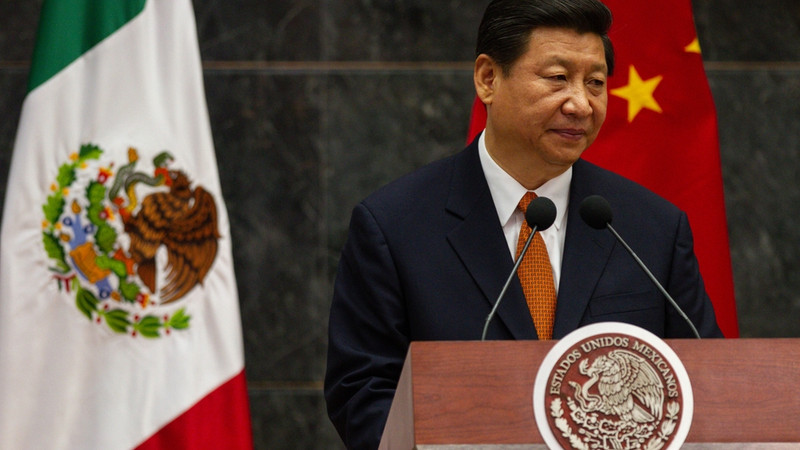
China is witnessing an extraordinary upheaval, with whispers of mutiny shaking the very foundations of Xi Jinping's regime. Reports suggest that a power struggle of epic proportions is underway, involving high-ranking generals and a regime teetering on the brink of crisis. This is a tale of intrigue that could rival any "Game of Thrones" scenario, with the presidency of Xi Jinping hanging in the balance.
- A significant power struggle has erupted in Beijing, involving key military figures.
- General Jahng Yo-shyah, a close ally of Xi, has been purged amid allegations of treason.
- China’s military command is in disarray, putting Xi’s plans, including those concerning Taiwan, into question.
Multiple sources report that a monumental power struggle has surfaced in Beijing. Out of the blue, Chinese President Xi Jinping has reportedly ousted his childhood confidant and the second-highest military official, General Jahng Yo-shyah. This move appears to be either a preemptive strike against a potential coup or a counter-coup after an alleged assassination attempt that has left China's military leadership in a state of paralysis.
General Jahng Yo-shyah was no ordinary bureaucrat; his military pedigree stretches back to the 1979 war with Vietnam. His father was one of Mao's trusted generals, responsible for Mao's personal security. The bond between Zhang’s family and Xi’s spans their entire lives, with ties forged during the Chinese Civil War. In 2022, as Xi secured an unprecedented third term, he persuaded Zhang to remain in service, making him second-in-command of the entire military. If anyone was secure within the People's Liberation Army, one would have thought it was Zhang.
Yet, on January 24th, China's Defense Ministry announced Zhang was under investigation for "serious violations of discipline and law." The rapidity of this development was startling; typically, the Communist Party takes months to announce such a purge, but this time it took a mere five days. Official charges against Zhang included forming political cliques, abusing authority, and taking bribes. However, the Wall Street Journal revealed a more shocking allegation: Zhang was accused of leaking nuclear weapons data to the CIA, a charge that would spell treason and certain death.
Curiously, Chinese state media made no mention of these nuclear allegations, which only appeared in Western outlets. If Zhang were truly guilty of such treachery, Beijing would surely publicize it widely. Instead, the narrative seems crafted for foreign eyes, suggesting propaganda rather than prosecution. Analysts largely dismiss the nuclear charge, questioning why a man of Zhang's stature would risk everything without defecting first.
The plot thickens with claims from Shang Yu, a Chinese-Canadian activist, who cited a source named "Mr. X." According to this source, Zhang and General Lee-oh Jun-lee planned to arrest Xi at the Jingxi Hotel on January 18th. However, the plan leaked, and Xi evaded capture, leading to a deadly ambush. The aftermath saw nine of Xi's guards and more than a dozen of Zhang's supporters killed. Zhang’s family and staff were swiftly detained, and the General Staff command system of the PLA was suspended. All military directives now flow directly through the Central Military Commission under encrypted communications.
The entire military was placed on Level 1 combat readiness, with troop movements frozen and mobile phones confiscated, while armored vehicles appeared in Beijing. This is not a response to mere corruption; it's a reaction to a mutiny. Xi has purged nearly the entire leadership of the Rocket Force, and multiple high-ranking officials have been removed or disappeared. Bloomberg reports at least 17 generals investigated, with nearly a million officials punished in 2025 alone.
Zhang’s removal signifies an unprecedented purge within the Chinese military. The Central Military Commission is now reduced to Xi and General Jahng Shuhng-meen, his enforcer. This power struggle suggests that Xi’s plans to prepare the PLA for an invasion of Taiwan by 2027 are now uncertain. Analysts believe that this internal chaos might delay any aggressive moves towards Taiwan, providing a temporary reprieve.
However, Xi’s long-term strategy seems to be the consolidation of power by appointing loyal generals. While this may postpone immediate threats, it poses greater risks down the line. As the military command structure remains in crisis, the 2027 timeline for Taiwan is in doubt. This situation serves as a stark reminder that authoritarian regimes often stagger from crisis to crisis until they eventually fracture. In Beijing, those fractures are now visible.
As these developments unfold, it's more important than ever to stay informed and inspired. Don’t miss out on the latest victories and faith renewals in our cultural landscape. Join the Weekly Wrap-Up free today at turley.pub/getaccess.
© 2025 TurleyTalks.com. All rights reserved.
Gain the Clarity, Confidence, and Community you need to lead with courage and awaken a new conservative age. Join the movement to fight back and reclaim freedom at fight.turleytalks.com!