
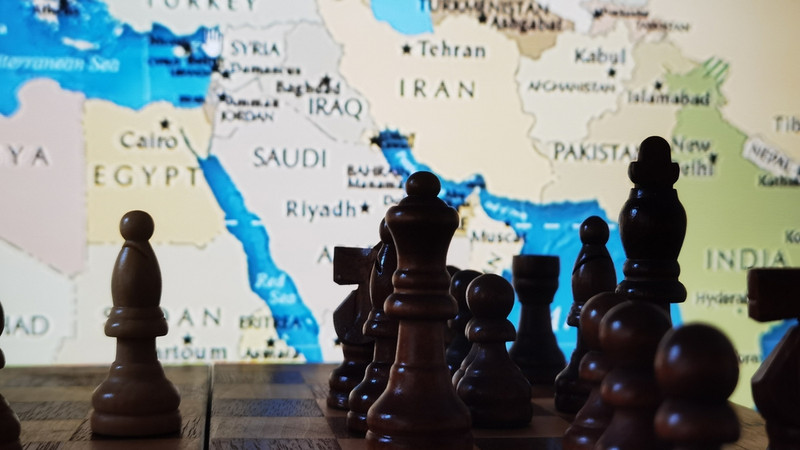
An extraordinary transformation is unfolding right before our eyes, orchestrated by none other than President Trump. As the world watches, the Islamic Republic of Iran teeters on the brink of chaos, while NATO faces an unprecedented crisis. And, make no mistake, this is not random upheaval—it's a calculated strategy.
- Vice President JD Vance is set to lead the U.S. in historic peace talks with Iran, marking the highest-level engagement since 1979.
- Iran's government is fracturing internally, with no true central authority in control.
- President Trump is leveraging these divisions, turning factions against one another without firing a single shot.
Vice President JD Vance is poised to spearhead a pivotal U.S. delegation in high-stakes talks with Iran in Islamabad, Pakistan. This marks a monumental moment, as it will be the highest direct engagement between the U.S. and Iran since the Islamic Revolution of 1979. Joining Vance will be special envoy Steve Witkoff and Jared Kushner, while Iran's side will be led by Parliament Speaker Mohammad Ghalibaf and Foreign Minister Abbas Araghchi. Yet, the composition of this Iranian delegation raises a pressing question: who exactly is steering Iran's ship?
In reality, the so-called ceasefire is a facade. Why? Because Iran no longer has an effective government. They present a deceptive front of governance, yet their regime is visibly splintering along long-standing fault lines, accelerating at a pace few anticipated.
On the ground, startling developments unfold. Over 50 senior Iranian officials have been eliminated in coordinated strikes, leaving the remaining leadership fragmented. They avoid large gatherings, have tightened communications, and have splintered into isolated factions out of fear. This strategic fracturing was deliberate, thinning the organizational backbone of the Islamic Republic. Where once there was a unified voice, there are now many competing ones.
The so-called Mosaic doctrine, a decentralized defense strategy, allows the IRGC to operate independently across 31 regiments if top leadership falls, resulting in sporadic missile launches. Iran's regime is no longer a single entity but a collection of factions. Analysts like Rod Martin and Mayhar Tousi point out a key insight: Trump isn't negotiating with Iran as a whole. Many factions, perhaps 31 or 24, exist, not all seeking peace or willing to negotiate. So, what is Trump actually doing with this ceasefire?
The bottom line: Trump is ingeniously pitting these factions against each other. He's making competing offers of money, power, and security to different factions, observing the fallout. If a faction betrays another, it eliminates a problem for Trump without American intervention. If they don't, Trump targets them again, aggravating internal conflicts in a regime lacking central authority. It’s a masterstroke. Within Iran, the diplomatic establishment led by President Pezeshkian seeks a deal, aiming to establish relations with the U.S. and Gulf countries. They face opposition from the IRGC, which issues ultimatums against peace proposals, branding advocates as collaborators with Western interests, and threatening their elimination. This is one faction of Iran threatening another. The factions are publicly turning on each other, and this isn’t chaos; it’s a controlled dismantling of a 47-year-old regime.
And Iran isn't the only target. NATO, too, is on Trump’s radar. The alliance, mistakenly dubbed the North American Treaty Organization by the New York Times, faces significant cracks. A single statement from NATO Secretary General Mark Rutte has sent tremors through Europe. After meeting with Trump, Rutte admitted on CNN that Trump is disappointed with NATO allies for their lack of support during the Iran conflict, and Rutte concurs. Trump has made it clear that the U.S. alone will decide NATO's future, not Spain, France, or the UK. He calls out the hypocrisy of nations that relied on the U.S. for defense yet refused to support American initiatives. Europe, despite its 450 million population and a $22 trillion GDP, cannot field a credible independent military force. Victor Davis Hanson attributes this to Europe's choice of utopia over capability, prioritizing welfare over military preparedness. Their declining fertility rates, energy dependency on Russia, and domestic fears of Islamic radicalism have left them impotent on the global stage.
So, what does moral posturing yield without hard power? Empty virtue signaling. Hanson suggests the U.S. should not leave NATO but rather pare down contributions, focusing on bilateral relationships with nations that truly partner with America, like Greece and Poland. Trump’s discontent with NATO isn’t a tantrum—it's a recognition of structural flaws in an alliance largely held together by American resolve, which cannot endure indefinitely.
As we navigate this critical time, it’s essential to stay informed and equipped. Join the courageous community of patriots working to restore what matters. With membership in the Courageous Patriots Club, you’ll unlock raw, unscripted moments with Dr. Steve Turley through Turley Walks—powerful insights that cut through the noise. Join now and experience the truth firsthand.
As events unfold in Iran and NATO, both appear to be collapsing under their own contradictions, setting the stage for an unprecedented geopolitical realignment.
© 2025 TurleyTalks.com. All rights reserved.
Gain the Clarity, Confidence, and Community you need to lead with courage and awaken a new conservative age. Join the movement to fight back and reclaim freedom at fight.turleytalks.com!
