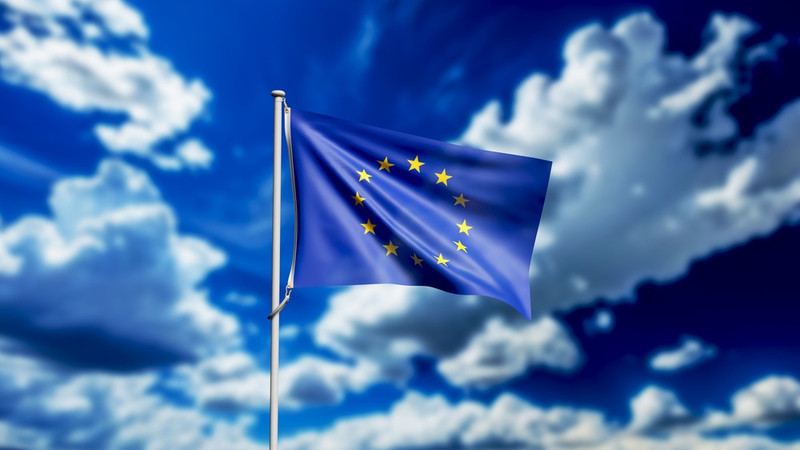
For years, European leaders dismissed President Trump's warnings about their energy dependencies, military commitments, and geopolitical alliances. They laughed him off as a buffoon while clinging to the illusion of power rooted in their historical contributions. Yet, last Thursday, the reality of their diminishing influence hit home. Watching the world's three most powerful leaders convene in China without a single European representative was a stark wake-up call. The consequences of ignoring Trump's foresight are now hitting Europe hard in their energy bills, security, and geopolitical influence—exactly as he predicted.
- November 19th marked a pivotal moment as world leaders gathered in Shenzhen, China, excluding European participation.
- Europe faces the repercussions of ignoring Trump's warnings on energy dependencies and defense spending.
- Shenzhen symbolizes the shift of global power from a stagnating Europe to a rising Asia.
On November 19th, the global balance of power visibly shifted. The world's three most powerful leaders met in Shenzhen, China, for a historic trilateral summit. This gathering, which lasted about ninety minutes, underscored Europe's humiliation as it was conspicuously absent. Previously, Trump engaged European leaders before his 2025 Alaska meeting with Putin, but this time, Europe found itself "frozen out," as Politico described.
Germany's Chancellor Friedrich Merz quickly dismissed the Shenzhen summit as a mere "photo op," warning against a Yalta-style world division, and insisted any deal without Europe would fail. In response, European leaders convened in Berlin, reaffirming their support for Ukraine. Yet, President Trump, fresh from Shenzhen, dialed in to remind them that the United States would not fund endless wars. This indifference from Trump was a long time coming, dating back to 2018 when he warned NATO's Secretary General in Brussels that Germany was "captive to Russia" due to its gas deals.
Trump's assertions were twofold: financial and strategic. The United States, he argued, was tasked with guarding against Russia while Germany funneled billions to Moscow, largely through the Nord Stream 2 pipeline. This infrastructure allowed Russia to bypass Poland and Ukraine, increasing Germany's dependency and vulnerability. When Russia invaded Ukraine, Germany felt the sting of this dependency as they scrambled to cut Russian gas imports from forty-five percent to twelve percent by 2025, while doubling liquefied natural gas imports from Russia.
Defense commitments were another sore point. Despite NATO's 2014 pledge to spend two percent of GDP on defense, meaningful progress only occurred under Trump's persistent pressure. By June 2025, European allies agreed to a five percent target by 2035. Their reluctance to invest in defense underscores why they lack a seat at the global decision-making table.
The financial strain is evident as European gas prices soared nearly two hundred percent since February, partly due to disruptions in LNG shipments through the Strait of Hormuz. European nations, reliant on external energy supplies, find themselves at the mercy of global conflicts. Despite their repeated humiliation, European leaders remain beholden to Washington, reducing the continent to a vassal state of the United States.
Europe's absence at Shenzhen highlighted its deficiencies: lacking energy independence, military might, and unified diplomacy. In stark contrast, the leaders in Shenzhen represent civilization-states capable of self-sustenance and self-defense. Europe, divided among twenty-seven ineffectual governments, couldn't even appoint a single envoy. The question often attributed to Henry Kissinger, "Who do I call when I want to call Europe?" remains unanswered.
Reflecting on the historic Yalta conference of 1945, where Roosevelt, Churchill, and Stalin represented unified Western interests, today's Europe is nowhere to be seen in global power discussions. Russia has distanced itself from Europe, which is embroiled in its own internal conflicts between pro-EU forces and nationalist populists.
In this multipolar world, dominated by resurgent Asia, Europe is sidelined. Shenzhen itself epitomizes this shift. From a small fishing town in 1980, it transformed into China's high-tech hub, while Europe's share of global output dwindled from 27.4% in 1980 to 14% by 2025. Germany's output shrank from 7% to 2.9%, while China's ascended from 2.7% to 17%.
Trump's criticisms of Europe's energy policies, military dependence, and global positioning have been vindicated. Europe has ceded its civilizational sovereignty to cheap labor imports and green energy delusions, while deferring defense to the U.S. military. Until Europe undergoes a civilizational renewal, it will remain humiliated on the global stage.
In this century, civilizations that can independently fuel, defend, and speak with one voice will dictate the rules. Those lacking these capabilities will be left waiting outside, hoping for a verdict. Europe, heed Trump's warnings, awaken, and reclaim your place in the world.
As we look toward this necessary renewal, it's time to stand with those who are committed to the movement. Join the ranks of patriots and get yours today: https://shop.turleytalks.com/.
© 2026 TurleyTalks.com. All rights reserved.
Gain the Clarity, Confidence, and Community you need to lead with courage and awaken a new conservative age. Join the movement to fight back and reclaim freedom at fight.turleytalks.com!
Turley Talks Coffee: Shop Bold Roast at https://turley.pub/TurleyTalksCoffee