
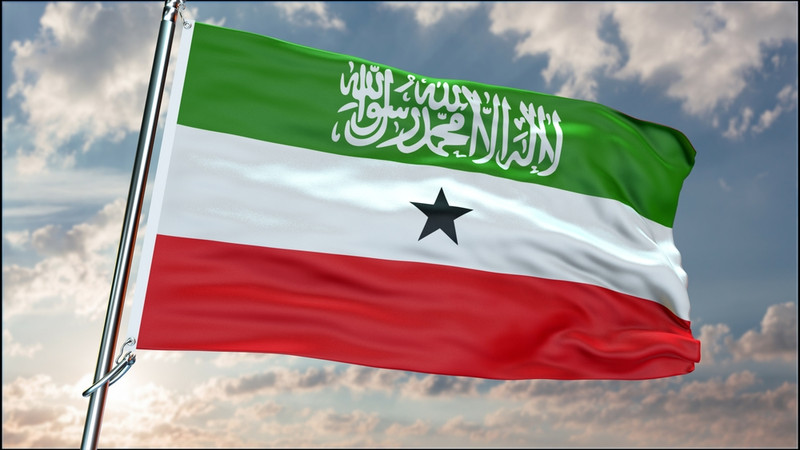
American flags wave through the streets, crowds gather in the city center, and Donald Trump's face shines above the people! Where are we? Believe it or not: Somaliland! Yes, President Trump and the MAGA movement are being publicly celebrated in the Horn of Africa, but what’s unfolding there raises a question far bigger than one African border. What’s happening in this obscure part of the world is central to the rise of a civilizationalist age where more and more populations are fighting for a future they can truly call their own!
- President Trump's remarks about Somaliland have sparked celebrations in its capital, Hargeisa.
- Somaliland's quest for recognition highlights its unique blend of modern democracy and traditional clan governance.
- Trump's cautious stance reflects geopolitical complexities, including alliances and shared cultural ties.
We are living in astonishing times, and to prove it, look no further than Hargeisa, the capital of Somaliland—not Somalia, but Somaliland. Here, a giant outdoor screen displayed President Trump’s portrait to the cheers of crowds gathered around the city’s aircraft monument. The celebrations erupted after President Trump, at an Ohio rally, lauded Somaliland and recognized it as its own country. While not a formal declaration—only Israel formally recognizes Somaliland as a sovereign nation—Trump did indeed distinguish Somaliland from Somalia, which he criticized. This brief aside sparked massive celebrations thousands of miles away, fueled by the hope of what Trump’s words might foreshadow.
Somaliland has been actively pressing its case for American recognition in Washington. In September, their president arrived with a high-level delegation, including ministers of foreign affairs, defense, and aviation, alongside economic and diplomatic advisers. Meetings with U.S. officials, lawmakers, and international partners focused on advancing recognition, security cooperation, trade, and investment. Somaliland’s pitch emphasizes its democratic stability, decades of self-government, and strategic importance along the Red Sea corridor—disrupted by the Houthis in Yemen—presenting recognition as an opportunity for partnership, not merely diplomatic charity.
To understand why people celebrate even the possibility of recognition, it’s essential to grasp what Somaliland is. This territory was once British Somaliland, independent in 1960, but quickly united with the southern territory to form the Somali Republic. The dream was Somali unity, uniting communities sharing language, religion, and culture. However, a shared cultural world did not automatically produce a legitimate political order. Power centralized under Siad Barre, whose dictatorship brutally repressed northern communities, especially the Isaaq. The 1988 bombardment of Hargeisa and Burao devastated civilians and livelihoods, leading to mass displacement. The aircraft monument in Hargeisa commemorates this, underscoring that Somaliland’s independence movement is more than a dispute over administrative boundaries.
After Barre’s regime collapsed, northern leaders declared Somaliland’s restored independence in May 1991. "Restored" is crucial: they claim sovereignty briefly held before the 1960 union, not inventing a new country. Declaring independence was just the beginning. They still had to build a government people would obey, and what they achieved highlights the significance of a rising civilizationalist order.
Somaliland’s government blends modern democracy with ancient clan traditions: voters elect a president and lower parliamentary chamber, while an upper chamber—the Guurti, or House of Elders—represents traditional clan authority. Clans are extended family networks whose elders historically negotiated agreements and maintained peace through customary rules. Instead of dismissing these relationships, Somaliland incorporated them into government. Elders helped negotiate its postwar political settlement, and the constitution grants their chamber special responsibilities concerning religion, culture, and security. Islamic principles shape the constitutional order, creating an archaeo-future hybrid: elected politicians operate alongside authorities deriving legitimacy from community standing and traditions, not just ballots.
While this system has built regional peace, it also presents challenges: the Guurti remains unelected; its legitimacy is tribal, not democratic. Authority stems from cultural tradition, not votes, leading to powerful clans dominating political offices. Somaliland illustrates both the stabilizing power of tradition and the challenges of making traditional authority democratically accountable by modern standards. Moreover, not everyone within its claimed borders accepts rule from Hargeisa; some loyalties lie with Somalia and Mogadishu. This reminds us that Somaliland and Somalia are not entirely separate civilizations; they share deep linguistic, religious, and cultural ties.
President Trump appears hesitant to recognize their sovereignty due to these complexities. The African Union and Somalia do not support it, and Trump needs allies in the Red Sea region to counter the Houthis' disruption of oil flow. However, Somaliland represents a predominantly Islamic people with close ties to the United States and Israel. Israel was the first to recognize Somaliland as sovereign. A predominantly Muslim society with such relationships defies the simplistic Third Worldist picture of perpetual conflict between the West and Islam.
When Trump’s face lights up in their capital city, those crowds are not just cheering an American politician; they’re expressing hope that a powerful country might finally acknowledge the political distinction they've defended for a generation.
As we consider the importance of preparation and resilience in the face of uncertainty, remember this: when disaster strikes, being equipped can mean the difference between survival and despair. Grab your Emergency Sleeping Bag here
Whether Washington ultimately recognizes Somaliland remains unresolved. But the image captures something larger: a new archaeo-future government demanding the world’s diplomatic map align with the communities living beneath it. The battle is not just over borders; it’s over who holds the sovereignty of civilization and the authority of the people to claim what historically belongs to them as their own.
© 2026 TurleyTalks.com. All rights reserved.
Gain the Clarity, Confidence, and Community you need to lead with courage and awaken a new conservative age. Join the movement to fight back and reclaim freedom at fight.turleytalks.com!
Turley Talks Coffee: Shop Bold Roast at https://turley.pub/TurleyTalksCoffee
