Italy's recent decision could redefine the very fabric of Western civilization. Prime Minister Giorgia Meloni's bold move is not merely another European law; it is a clarion call for nations cherishing freedom, sovereignty, and cultural endurance. What is unfolding in Rome is not an isolated event but a ripple that is echoing across the continent and beyond.
- Italy's Brothers of Italy party has introduced a nationwide ban on the burqa and niqab, emphasizing national sovereignty over alternative legal frameworks.
- Prime Minister Meloni asserts this law is part of an effort to curb cultural separatism and foreign influence, reinforcing Italy's Christian values.
- This legislative move is part of a broader European shift towards 'civilizational populism,' challenging the globalist agenda and reasserting national identities.
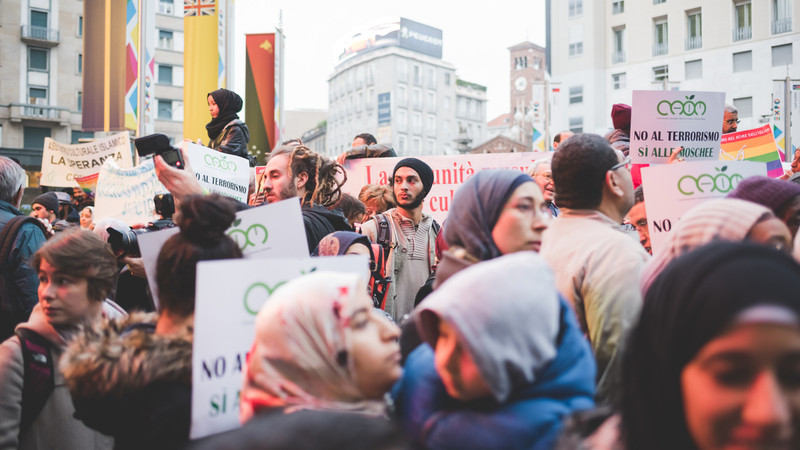
Italy's ruling party, the Brothers of Italy, has taken a definitive step by proposing legislation to ban the burqa and niqab in all public spaces—be it schools, shops, offices, or streets. This bill mandates identification checks for individuals wearing full-face coverings, granting police the authority to stop and document them without prior suspicion. The law applies universally across Italian society, with no religious exemptions, underscoring that national law supersedes any alternative legal claims. Violators face steep fines of up to $3,000, aligning with previous local restrictions in regions like Lombardy and towns such as Novara, which were enacted on security grounds coverage noting.
At the forefront of this initiative is Prime Minister Giorgia Meloni, a nationalist populist who does not mince words. She has highlighted a fundamental "compatibility problem" between Islamic culture and the Christian values that undergird Europe. With many Islamic cultural centers in Italy funded by Saudi Arabia, Meloni has vowed that Italy will not allow foreign governments to dictate its public life or erode its constitutional values. This isn't merely about clothing; it's about cultural separatism, foreign influence, and the West's resolve to defend its identity rather than surrender it incrementally.
Andrea Delmastro, a key lawmaker behind the bill, succinctly stated on Facebook, "Religious freedom is sacred, but it must be exercised in the open, in full respect of our Constitution and the principles of the Italian state." Here, religious freedom is not an absolute but is conditioned on integration with shared civic norms rooted in a dominant religious tradition. Public law triumphs over private ideology, drawing a clear battle line.
Under Meloni's leadership, Italy has halved migrant arrivals through assertive agreements with North African nations, detained asylum seekers for up to two years, and weakened integration policies. Imams have been deported for politically charged comments, and between January 2023 and July 2024, Italy expelled 130 individuals for state security reasons and arrested 36 extremists. Despite a Muslim population of 1.5 million, Italy does not officially recognize Islam as a legally protected religion, and this stance shows no signs of changing.
Italy's actions are reflective of a broader European trend. The continent has long grappled with whether it can absorb any practice or belief without consequences. France was the first Western nation to say "no" in 2011, banning full-face veils, and many others have followed suit. The European Court of Human Rights has upheld these bans, affirming the right of governments to promote social cohesion and protect the principle of "living together." Italy's existing law from the 1970s against complete face coverings did not specifically mention religious garments, but Meloni's proposal goes further, targeting cultural separatism as part of a strategy to safeguard national sovereignty. The bill also demands transparency in mosque funding, imposes stricter penalties for forced marriages, and criminalizes virginity testing.
Sara Kelany, head of immigration for the Brothers of Italy, declared at a press conference, "The law against Islamic separatism represents a necessary step to protect Italian identity and the freedom of women." Italy's laws are applied based on a specific set of values, signaling a unified nation with a single legal framework, a single public space, and no parallel societies. No foreign entities will dictate cultural norms.
This movement in Italy is merely the beginning. It raises fundamental questions about what it means to be European and which cultures align with European values. Scholars refer to this as 'civilizational populism.' Harvard scholar Sam Huntington defined civilization as the broadest cultural grouping of people, bounded by borders, economy, and culture. European populists increasingly view their unique civilization as under threat from foreign influences, permitted by a corrupt globalist elite centered in Brussels for political gain.
Open borders facilitate the importation of cheap labor, maximizing corporate profits that then finance politicians who keep the borders open. When citizens demand closed borders and defend national sovereignty, they are branded as far-right xenophobes—a caricature that only fuels the rise of civilizational populism, especially its religious dimension. Consequently, we witness a massive backlash across the West, notably in Europe, where Christianity is resurging as a cornerstone for reclaiming European culture and politics.
Leaders like Geert Wilders, Jimmie Åkesson, Marine Le Pen, Giorgia Meloni, Viktor Orbán, and Poland's newly elected President Karol Narotski call for Christianity's return to the public square as a defense against cultural erosion. Italy and other European nations are drawing a line: Public spaces belong to all citizens, and no foreign ideology will override national law. Women will be safeguarded, and civic unity will be enforced.
For Americans observing this unfolding saga, the lesson is urgent. Our streets, schools, and public institutions face similar challenges. The debate over assimilation, public expression, and the balance between freedom and national cohesion affects us all. Bold action is necessary to preserve civilization; hesitation invites fragmentation.
To further engage with this critical conversation and take actionable steps towards cultural renewal, join me for a special live event on Christian art and its role in our communities. Don’t miss out—RSVP today and receive a FREE copy of Beauty Matters. **Limited seats available—secure your spot now!** Join here.
The choice has never been clearer.
© 2025 TurleyTalks.com. All rights reserved.
Gain the Clarity, Confidence, and Community you need to lead with courage and awaken a new conservative age. Join the movement to fight back and reclaim freedom at fight.turleytalks.com!