
Denmark is declaring war on immigration, and it's causing ripples across Europe. Once a beacon of liberal openness, Denmark is now leading a charge that many wouldn't have predicted, reflecting a broader continental shift in response to mass immigration.
- Denmark's liberal immigration policies have led to significant demographic changes, unsettling the nation.
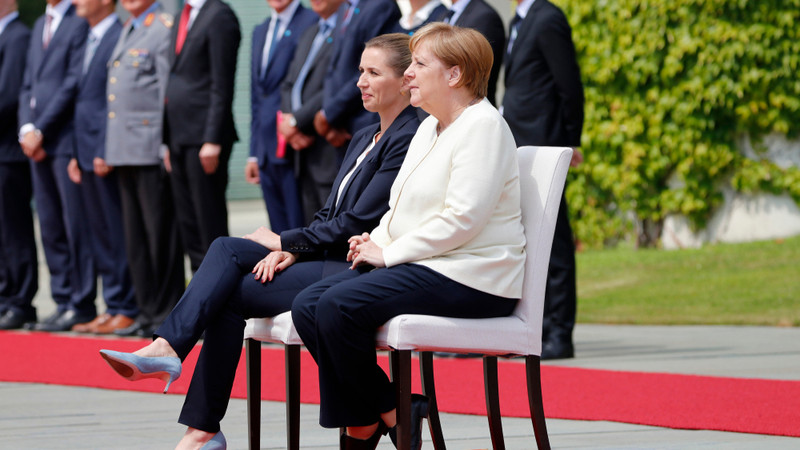
- The shift in Denmark's stance on immigration is now spearheaded by its liberal Prime Minister, Mette Frederiksen.
- This dramatic pivot has resulted in a cross-party consensus to minimize refugee intake, setting a new European standard.
The scenes unfolding in Denmark are striking. Streets once emblematic of Scandinavian prosperity and liberal values now echo with mass Islamic prayers—an unforeseen consequence of Denmark's historically liberal immigration policies. Denmark was a pioneer in refugee protection, signing the 1951 Refugee Convention alongside Australia and Belgium. In the post-World War II era, the nation actively recruited guest workers from Turkey and Pakistan, expecting them to fill labor shortages and eventually return home. However, many stayed, bringing their families, and the immigrant population grew exponentially.
In 1980, immigrants comprised just 2.6% of Denmark's population, but by 2025, that number had soared to 12.6%, with an additional 3.7% being Danes born to immigrant parents. This demographic shift felt abrupt and disruptive to many. The seismic moment came during the 2015 European migration crisis when over a million asylum seekers entered Europe, with Denmark—a country of six million—receiving 21,000 asylum applications in a year, a six-fold increase from 2012. The asylum system buckled under the pressure, prompting Denmark to restore border controls and slash refugee benefits.
For a nation known for its generous welfare and open-mindedness, this marked a dramatic change. The reasons were clear—ethnic enclaves formed, unemployment and crime rates among immigrants soared, and societal integration faltered. Immigrants accounted for 30% of violent crime convictions, far outstripping their population share. Financial strains further fueled public concern. In 2018, Denmark reported a net annual cost of 31 billion Danish kroner due to non-Western immigrants and their children. By 2025, public expenditure on Syrian refugees vastly outweighed their total income, exacerbating an already heated debate over housing and welfare costs.
Denmark's response has been robust and relentless. In 2016, the government enacted the controversial "jewelry law," allowing authorities to confiscate valuables from asylum seekers to offset their upkeep costs jewelry law. Two years later, the "ghetto package" imposed harsher legal standards on immigrant-heavy neighborhoods. Controversially, children as young as one in these areas were mandated to attend daycare to ensure cultural integration—a move that reflected a no-nonsense approach to assimilation.
But the real shock came from the unexpected political player leading this charge. Liberal Prime Minister Mette Frederiksen, head of the center-left Social Democrats, embraced and advanced these stringent policies, echoing those of the far-right Danish People's Party. Her stance led to a resounding electoral victory in 2019, as voters saw no need for the far-right when mainstream parties adopted their policies. Frederiksen boldly declared in Parliament that Denmark's aim was zero asylum seekers—a declaration that reflected a rare cross-party consensus.
As this transformation unfolds, it’s crucial to stay informed about the shifting landscape across Europe. For your daily dose of truth—quick and impactful—check out Turley Clips. It’s your daily shot of truth in 60 seconds or less. 👉 Subscribe to Turley Clips now!
Denmark's dramatic decrease in asylum applications—from over 21,000 in 2015 to less than 300 in 2021—demonstrates the tangible impact of these policies. The nation is now setting an example for Europe, showing that a welfare state and open borders cannot coexist. This new approach includes transferring asylum seekers to third countries like Rwanda for processing, illustrating a decisive shift towards deterrence and control.
As the European Union begins to follow Denmark's lead, sealing deals to hasten migrant returns, even the bureaucrats in Brussels are heeding the popular call for sovereignty restoration. Denmark's transformation epitomizes what happens when a welfare state faces mass immigration from culturally divergent populations. It is a tale of integration attempts deemed failures and a subsequent radical pivot. Denmark has opted for cultural preservation and societal sustainability, and the echoes of this decision are reverberating across Europe. The doors, once open wide, are now firmly closing—and the message is clear for the Western world.
© 2025 TurleyTalks.com. All rights reserved.
Gain the Clarity, Confidence, and Community you need to lead with courage and awaken a new conservative age. Join the movement to fight back and reclaim freedom at fight.turleytalks.com!