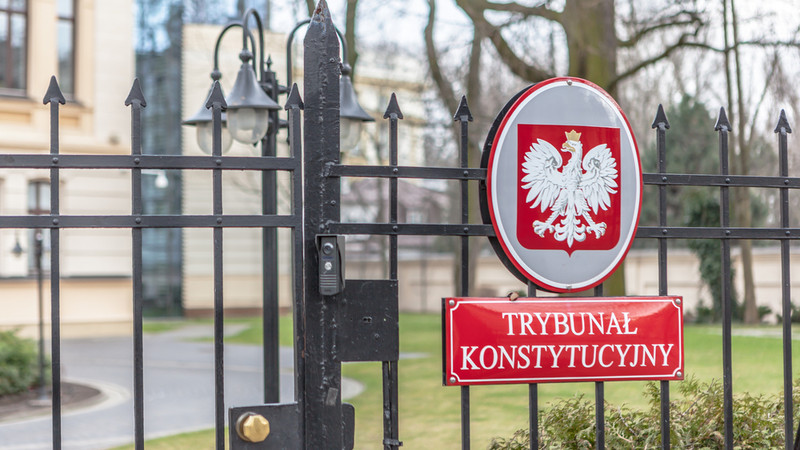
Something extraordinary is unfolding in Poland: riot police stand guard outside the Constitutional Tribunal, rival judges vie for control, and a president rushes back to Warsaw to confront an escalating constitutional crisis. Over the weekend, these dramatic events culminated in Poland's president declaring an attempted coup. A fierce battle has erupted in Warsaw over the country's constitution and the rightful authority of its government.
- The core conflict centers around Poland’s Constitutional Tribunal and its legitimacy.
- President Karol Narocki, a Trump ally, refuses to recognize newly appointed judges.
- A constitutional showdown looms, with both sides seeking control of the tribunal.
To understand this crisis, we must rewind to March when Poland’s lower parliamentary house, the Sejm, elected Judge Anna Korwin-Piotrowska to the Constitutional Tribunal. President Karol Narocki, a staunch conservative and Trump ally, refused to legitimize this election, challenging the procedure and the individualization of appointments as mandated by the constitution. Despite this, the pro-EU liberal parliament, led by former EU President Donald Tusk, installed her anyway. Narocki held firm, insisting that judges must take their oath in his presence. Nevertheless, Korwin-Piotrowska and three others proceeded with an oath-taking ceremony without him on April 9th, asserting their right to begin work.
The president of the Constitutional Tribunal, Bogdan Święczkowski, an ally of Narocki, also rejected their appointments, stating that, without an oath before the president, the judges could not be recognized. This has resulted in a prolonged standoff over whether these judges can exercise tribunal authority. The matter escalated to the European Court of Human Rights, which sided with the liberal globalists, ordering Poland to permit the four judges to assume their positions. Yet, Święczkowski denied the court's authority, igniting a debate over who truly belongs on the tribunal and who has the ultimate authority.
This past Friday, Korwin-Piotrowska made a bold move, announcing the suspension of Święczkowski and his deputy for allegedly obstructing the new judges and improperly assigning cases. She declared herself acting head, citing her extensive judicial experience, even though she had not been officially appointed as president or vice-president. This raises two critical questions: could she legally suspend these officials, and if so, does that make her the rightful acting head? Her camp argues that statutes permit an emergency suspension, but many constitutional scholars contest this interpretation.
As tensions mounted, police surrounded the tribunal, citing threats to judges and staff. President Narocki cut short a trip to Senegal, returning to Warsaw to personally address what he called a coup attempt by Polish liberals with Brussels' backing to oust conservative judges. Narocki has taken a dual approach: reversing what he deems an unlawful takeover and negotiating a "constitutional reset" to restore the tribunal's integrity. He demands the restoration of the tribunal's legitimate leadership while convening party leaders across the political spectrum to discuss a fair resolution. This reset might involve ending current judges' terms and selecting a new tribunal through unanimous agreement, ensuring no single majority dictates appointments.
In the midst of this constitutional turmoil, it’s essential for patriots to stay informed and engaged. Don’t miss out on the latest updates and insights that matter to you. Join the Weekly Wrap-Up free today.
However, standing in the way is liberal globalist Donald Tusk, the prime minister, who dismisses the reset proposal. Tusk insists that Narocki should recognize the parliamentary appointments and argues that this confrontation is a chance to bolster parliamentary power, diminishing presidential influence. This constitutional confrontation is building up to a critical tribunal assembly on November 3rd, where Korwin-Piotrowska plans to convene a General Assembly of judges. The outcome will determine if she can solidify her claimed leadership or if the legitimacy battle will persist.
Whether or not Tusk acknowledges it, even liberal legal scholars claim he and the judges have overstepped. This clash over authority in Warsaw and Brussels marks just the beginning of a broader struggle for control.
© 2026 TurleyTalks.com. All rights reserved.
Gain the Clarity, Confidence, and Community you need to lead with courage and awaken a new conservative age. Join the movement to fight back and reclaim freedom at fight.turleytalks.com!
Turley Talks Coffee: Shop Bold Roast at https://turley.pub/TurleyTalksCoffee