The European Union has faced a humiliating blow, being sidelined in peace talks led by the U.S. and Russia. As liberal globalism crumbles, the EU's exclusion reveals a stark truth: when you invest in ideology over power, you end up marginalized and irrelevant.
- Trump envoys met with Russian officials, initiating the first trilateral talks with Ukraine, with the EU conspicuously absent.
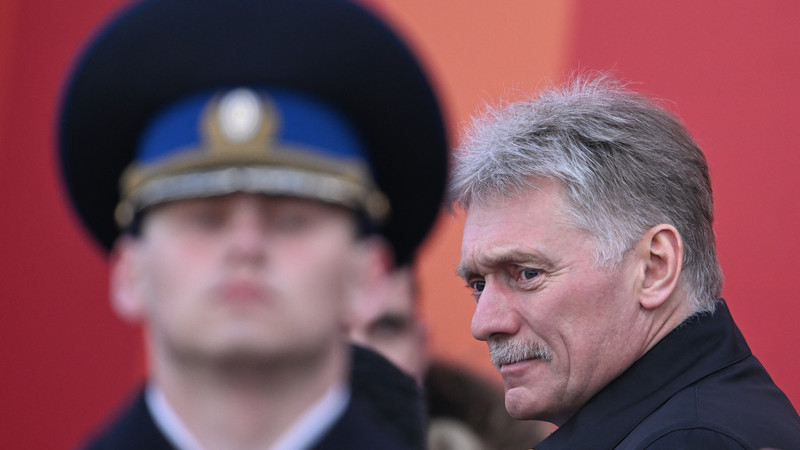
- Kremlin's Dmitry Peskov labeled EU leaders "semi-literate," further isolating them from negotiations.
- Europe’s reliance on soft power and ideology has left it sidelined in an emerging multipolar world dominated by hard power.
Recently, as the liberal order unraveled at Davos, Trump envoys Steve Witkoff and Jared Kushner engaged in a critical four-hour dialogue with Russian officials at the Kremlin, laying groundwork for future discussions. This meeting set the stage for the first official trilateral talks in Abu Dhabi involving Russia, Ukraine, and the U.S. Notably absent from these crucial conversations was the European Union. With influential figures like Kirill Dmitriev, CEO of Russia's sovereign wealth fund, in attendance, the focus was on forging constructive economic ties—a key element in Trump’s vision of global realignment. His strategy emphasizes commerce over conflict, believing that mutually beneficial relations are essential for lasting peace. Yet, the absence of any EU representatives was striking, underscoring their diminishing relevance.
As the real power players convened, Brussels found itself uninvited—an unceremonious fall for a bloc that once fancied itself a leader in global diplomacy. This marks the stark moment when Europe’s liberal globalist fantasies met the reality of hard power. The EU, reduced to spectators, learned that funding a war doesn’t ensure a seat at the peace table. Kremlin spokesman Dmitry Peskov didn't mince words, dismissing EU leadership as "semi-literate, incompetent functionaries" and excluding their chief negotiator, Kaja Kallas, from any future talks. Her staunchly anti-Russian stance, demanding uncompromising sanctions and the return of all conquered territories—including Crimea—only fueled her exclusion.
While Kallas's rhetoric may resonate in Brussels, it appears delusional to those entrenched in the realpolitik of Great Power Politics. Russia views her as an ideological adversary, not a credible negotiator. Meanwhile, internal dissent within the EU is growing, with Hungary and Slovakia openly challenging the bloc's rigid stance. Slovak Prime Minister Robert Fico has likened the EU to a "massage parlor"—all talk, no results—and called for Kallas's resignation. Hungarian Prime Minister Viktor Orbán has accused Brussels of dragging Europe into an endless war with no exit strategy. Across the continent, war fatigue and disenchantment with EU bureaucrats are mounting.
These Eurocrats, steeped in liberal ideology, seem oblivious to the new world order emerging. The EU funded a conflict it can no longer control, backed a diplomat without respect, and pushed an ideology that no longer resonates beyond its borders. Now, they find themselves in the waiting room as the real decision-makers—Washington and Moscow—chart the future. This isn't merely a diplomatic snub; it's the resurgence of Great Power Politics, leaving European leaders in the dust. The liberal order that dominated since 1991 is dead, even acknowledged by the globalists themselves.
Today, a civilizationalist world order is taking shape, where a handful of powers govern their cultural and geographic spheres. Russia, China, India, and the United States are carving the world into distinct domains. Europe, having outsourced military security to the U.S., ceded industrial capacity to China, and based its foreign policy on lecturing others, finds itself a relic in this new order. As Russia and the U.S. negotiate Eastern Europe’s future, Brussels might receive a courtesy call—if they're lucky. Not due to Trump’s or Putin’s whims, but because great powers negotiate with equals. Europe, now a regulatory zone with grand delusions, must face this new reality.
The big questions—Taiwan, the Middle East, Central Asia, even European security—will be resolved by conversations among Washington, Moscow, Beijing, and potentially New Delhi. Brussels will learn of these outcomes from the news. This isn't pessimism; it's the world as it is in 2026. The era of pretending Europe holds diplomatic weight is over, and Kaja Kallas has become the emblem of this humbling truth.
As we navigate this rapidly changing political landscape, it’s crucial to stay updated on these pivotal developments. If you want the latest updates and some behind-the-scenes goodies, head over to turley.pub/news and sign up for our newsletter. Big things are always coming!
© 2025 TurleyTalks.com. All rights reserved.
Gain the Clarity, Confidence, and Community you need to lead with courage and awaken a new conservative age. Join the movement to fight back and reclaim freedom at fight.turleytalks.com!