
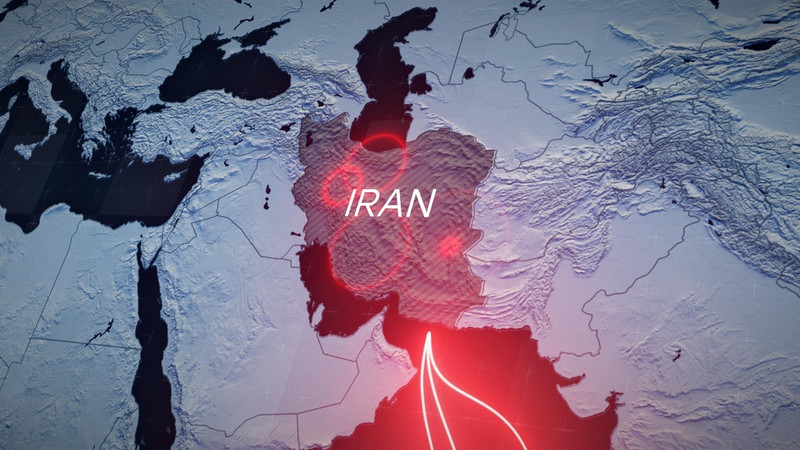
Iran and its apologists once believed they held all the cards. They thought they had the ultimate insurance policy: control over the 21-mile chokepoint that could starve the world of 20 percent of its oil supply. They boasted a ring of regional proxy armies — Hezbollah in Lebanon, the Houthis in Yemen, militias in Iraq and Syria — ready to make anyone who dared challenge Iran bleed. They envisioned a hail of missiles falling on Gulf Arab states, forcing them to beg U.S. and Israeli forces to intervene. But one by one, every single one of those cards has collapsed, much to the horror of skeptics and doubters in the legacy media. President Trump has achieved the unimaginable!
- Iran's military encirclement is complete, with Pakistani forces now stationed in Saudi Arabia.
- Energy routes bypassing the Strait of Hormuz have been restored, neutralizing Iran’s leverage.
- Diplomatic breakthroughs are underway, with Lebanon potentially joining the Abraham Accords.
Let's begin with the military encirclement, a geopolitical maneuver of monumental proportions. On April 10th, Pakistan deployed 13,000 elite troops and 10 to 18 JF-17 Thunder Block 3 fighter jets to King Abdulaziz Air Base in Saudi Arabia's Eastern Province. This base is a mere 60 kilometers from the Abqaiq oil processing facility — the largest crude oil stabilization plant on Earth — and just a stone's throw from the Iranian border. Pakistan also brought ZDK-03 AWACS early warning aircraft and mid-air refueling tankers. This is not a symbolic gesture; it's a full-spectrum air defense deployment. In fact, this is the largest Pakistani military deployment to Saudi Arabia since the first Gulf War in 1991, authorized under a mutual defense agreement signed between Riyadh and Islamabad last September. For Iran, this means encirclement: to the west, Saudi Arabia with Pakistani air power; to the east, the U.S. Fifth Fleet; to the south, UAE and Bahrain hosting F-35s, Patriot batteries, and THAAD systems; to the north, Turkey in NATO's orbit. Iran is not just under pressure; it's completely boxed in.
But it's not just military strategy at play; there's an energy dimension as well. Iran's control over the Strait of Hormuz, holding 20 percent of the world’s energy supply hostage, was supposed to be their ultimate insurance policy. Yet, in a masterstroke, on April 12th, Saudi Arabia announced that its East-West "Petroline" pipeline had been fully restored to maximum capacity, allowing seven million barrels per day to flow west across the Arabian Peninsula to the Red Sea port of Yanbu. This completely bypasses the Strait of Hormuz. Iran had struck Saudi pipeline infrastructure in early April, temporarily knocking out roughly 700,000 barrels per day of throughput. But Saudi Arabia repaired it in just days. Since late February, when Iran's Hormuz blockade began, Saudi Arabia had already quadrupled crude shipments from its Red Sea terminals. They were ready, and they anticipated this, building around Iran before Iran even realized.
As these geopolitical shifts unfold, it’s crucial to stay informed about the latest developments and insights. If you want the latest updates and some behind-the-scenes goodies, head over to turley.pub/news and sign up for our newsletter. Big things are always coming!
And it's not just Saudi Arabia making these moves. Right next door in the UAE, another bypass pipeline quietly hums along. The Habshan–Fujairah pipeline, a 380-kilometer buried infrastructure running from Abu Dhabi's interior oil fields straight to the Gulf of Oman port of Fujairah, operates at a capacity of 1.5 to 1.8 million barrels per day. Here's the irony: that pipeline was built by Chinese companies — specifically CPECC, a subsidiary of China's state-owned CNPC, the China National Petroleum Corporation. China is Iran's most important ally, the regime's single biggest oil customer, buying 80% of Iran's exported crude. And yet, China built the very pipeline infrastructure allowing Gulf states to bypass the Strait of Hormuz, neutralizing Tehran's supposed trump card. In attempting to weaponize Hormuz, Iran incentivized its neighbors — with Chinese labor and capital — to render Hormuz irrelevant. This isn't just a strategic failure; it's civilizational self-destruction.
Moreover, China itself is in a bind. Forty percent of its oil flows through the Strait of Hormuz. Every day the strait remains contested, China's industrial machine is squeezed, burning through reserves and scrambling for alternatives. And where are those alternatives? America! American crude and LNG are already flowing to China, with tanker tracking data showing roughly 600,000 barrels per day of U.S. crude heading there, worth nearly 10 billion dollars a month at current prices. China is being forced — kicking and screaming — back to American energy markets. President Trump has engineered a scenario where Iran's nuclear program is being dismantled, its Hormuz leverage eliminated, it is encircled by Gulf coalition forces, and China is compelled to buy American oil.
But wait, it gets better! This week, the most seismic development of all is unfolding in Washington, D.C., involving Lebanon. On April 13th and 14th, Israeli and Lebanese envoys held their first direct, high-level diplomatic talks since 1993, brokered by the United States and Secretary of State Marco Rubio. Both sides agreed to begin formal peace negotiations. The jaw-dropping detail is this: the Lebanese government has reportedly offered Israel extensive cooperation in neutralizing Hezbollah as part of a prospective deal. Remember, Lebanon officially declared Hezbollah a banned organization, and now it's willing to work with Israel to dismantle them. Lebanon — Hezbollah's home and Iran's launchpad for its most powerful non-state military force — is now offering to help dismantle Hezbollah in exchange for peace and normalization with Israel. If this holds, Lebanon could join the Abraham Accords framework, following the UAE, Bahrain, Sudan, Morocco, and others. But unlike previous signatories, Lebanon's entry would come with the dismantling of Iran's most sophisticated regional proxy.
So let's zoom out for the full strategic picture. Iran built its regional power on four pillars: its nuclear program, Hormuz leverage, proxy network, and alliance with China and Russia. Western apologists for Iran have claimed these made them unassailable. But let's assess them one by one. The nuclear program? Obliterated by U.S. and Israeli strikes. Hormuz leverage? Gone, bypassed by Saudi and UAE pipelines, and now assisting American energy exports, as American naval forces blockade Iran. The regional proxy network? The Houthis are under relentless bombardment, Iraqi militias defanged, Assad's regime in Syria leaning pro-Saudi and pro-American, and Lebanon at a peace table in Washington, offering to neutralize Hezbollah. The China-Russia backstop? Russia is consumed by Ukraine and economic survival, while China is being squeezed into buying American oil, even as it built the infrastructure to bypass Hormuz!
Every pillar has been knocked out from under the regime, simultaneously, in weeks. This is what the Abraham Accords architecture was designed to achieve: a Sunni-Israeli-American axis squeezing the Iranian revolutionary model into irrelevance. It's working faster and more completely than anyone dared hope. Iran is not just losing a war; it's losing the world it built. Every proxy weakened, every chokepoint bypassed, every card taken off the table. The regime thought it built an unassailable empire; that empire has just met its match and is collapsing in real-time.
© 2025 TurleyTalks.com. All rights reserved.
Gain the Clarity, Confidence, and Community you need to lead with courage and awaken a new conservative age. Join the movement to fight back and reclaim freedom at fight.turleytalks.com!


