
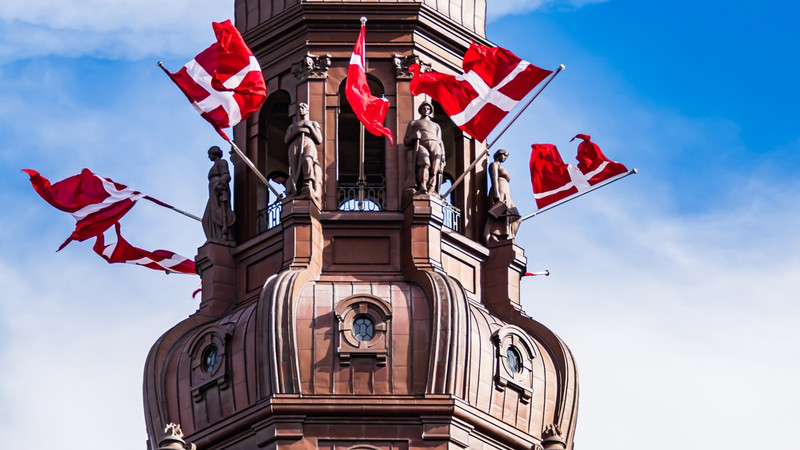
Denmark's groundbreaking initiative against Islamic cultural enclaves is shaking the European status quo to its core. In a move that has left Brussels quaking, the Danish government has implemented a series of bold measures aimed at reclaiming national identity and sovereignty. This isn't happening in some conservative stronghold, but in Denmark—a nation renowned for its progressive, welfare-centric ethos. The implications of Denmark’s actions extend far beyond its borders, signaling a seismic shift in European politics that could redefine the continent's future.
- Denmark's new policies are reversing decades of lenient immigration practices.
- These actions, led by Denmark's left-wing government, are disrupting the traditional political landscape.
- The Danish strategy is inspiring other European nations to reconsider their approach to immigration.
European leaders have long walked on eggshells around the issue of Political Islam, but Denmark has shattered this silence with a legislative strategy that has left globalists unnerved and conservatives heartened. To understand the magnitude of Denmark's shift, we must first recognize the path it has taken. Like many Western European countries, Denmark once believed that immigration was a net positive, envisioning a future where Middle Eastern, North African, and Somali immigrants would seamlessly blend into Danish society. They offered open arms, financial support, and refuge, waiting patiently for integration to take root.
Yet, the data painted a starkly different picture. Immigrants, making up 14% of the population, were responsible for 30% of violent crime convictions. Somali citizens, in particular, had a shocking conviction rate of 114 per 1,000 residents, compared to just 12 among Danes. In 2018, non-Western immigrants and their descendants cost Denmark approximately 31 billion kroner, or 4.2 billion U.S. dollars. But numbers only tell part of the story.
In neighborhoods across Copenhagen, Aarhus, and Odense, Danish was no longer the prevailing language, and sharia norms began to dictate daily life. This wasn't harmless diversity but rather enclaves that operated under their own legal systems, separate from Danish law. Women who defied these norms faced harassment, and schoolchildren were indoctrinated to view their Danish culture as inferior. Denmark was witnessing the rise of a state within a state.
In response, Denmark enacted sweeping measures. In 2018, they banned the burqa and niqab in public spaces, undeterred by accusations of Islamophobia from the European press and human rights groups. They further introduced the "ghetto laws," imposing stricter penalties within designated neighborhoods and mandating Danish cultural education for toddlers. Despite backlash from European institutions, Denmark stood firm.
The most astonishing development came in 2026 when Denmark’s left-wing Prime Minister, Mette Frederiksen, extended the public veil ban to all educational institutions. This was not just a policy but a declaration of cultural sovereignty. Moreover, Denmark established a sanctions list barring foreign religious leaders who promoted ideologies incompatible with Danish law. This was a bold statement of civilizational intent, not mere immigration policy.
The results speak volumes. Asylum applications plummeted from over 21,000 in 2015 to under 1,000 approvals in 2025. The so-called far-right Danish People's Party saw its support collapse because the mainstream left had already implemented its policies, and executed them with greater efficacy. This was a political realignment of epic proportions, signaling a new era in European politics.
Globalists in the EU are in a panic, not merely because they oppose Denmark’s policies, but because the political realignment these policies represent challenges the very foundation of their ideology. For years, confronting Political Islam was dismissed as a right-wing endeavor. Yet Denmark, using left-wing rhetoric and mechanisms, has debunked this narrative. At the heart of this shift is a simple truth: a nation cannot sustain both open borders and a generous welfare state. Denmark, like the far-left Die Linke in Germany, recognizes this economic reality.
The lesson for the West is clear. The challenge is not whether to confront these parallel societies, but whether our political leaders possess the courage to do so. Denmark has found that courage, with both political wings united in a common cause. Asylum numbers are at historic lows, and the far right has become redundant. Europe, albeit quietly, is taking note. The doors that were once open are now decisively closing, and the reverberations are being felt across the continent.
In these transformative times, staying informed and engaged is crucial. Join the Weekly Wrap-Up free today at Turley.pub to receive uplifting insights every Friday that highlight the victories and momentum in the fight for our values.
If Denmark can forge this path, so too can other nations.
© 2025 TurleyTalks.com. All rights reserved.
Gain the Clarity, Confidence, and Community you need to lead with courage and awaken a new conservative age. Join the movement to fight back and reclaim freedom at fight.turleytalks.com!
