
China built the greatest industrial machine the modern world has ever seen—an economic behemoth that many believed was destined to overtake the United States. But beneath the surface, something extraordinary is happening. President Trump is quietly transforming America's markets, technology, energy, and trade relations into instruments of unparalleled national power. As a result, China will never be the same.
- China faces a profound supply-and-demand imbalance, heavily reliant on foreign markets.
- President Trump has strategically repositioned America’s economic leverage against China.
- This shift challenges China’s industrial dominance by restricting access to critical markets and technologies.
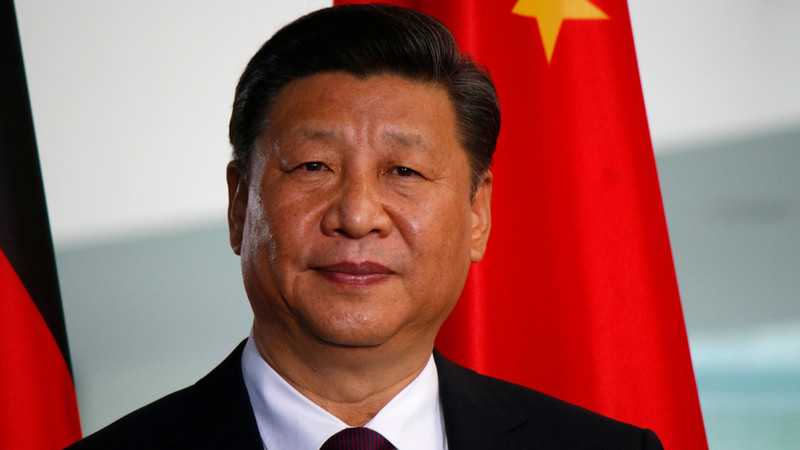
We are witnessing the dawn of a new geopolitical reality, as seemingly unrelated events converge to reveal a decisive shift in global power dynamics. Just days ago, Chinese President Xi Jinping visited Washington, D.C., engaging with President Trump on issues such as trade, Taiwan, Iran, artificial intelligence, and military power. These aren't isolated discussions but rather parts of a larger strategic puzzle—a struggle over who will command the future and what values will guide it. This is a realignment of two great civilizations, with one emerging as the clear leader.
Amidst the diplomatic decorum, a stark economic truth is emerging: China needs access to America far more than America needs China. President Trump is turning this imbalance into a strategic advantage for the twenty-first century. China is more vulnerable to losing access to the American market than the U.S. is to losing access to China. This doesn’t imply China is collapsing. Beijing still boasts the world's most formidable manufacturing base and remains competitive in high-tech sectors. However, China faces a critical issue: it cannot generate enough domestic demand to absorb everything it produces.
Thus, Beijing is increasingly dependent on the global market—particularly the vast American-centered economic system—to absorb its industrial surplus. This dependency is precisely the vulnerability that Trump is exploiting. China now grapples with an acute supply-and-demand imbalance. Its factories churn out products at an extraordinary scale, but Chinese households are hesitant to spend. Property values are falling, developers are struggling, and local governments are burdened by debt. Consequently, families with savings tied up in real estate are becoming increasingly cautious. The International Monetary Fund has lowered China’s 2026 growth forecast to 4.5 percent, the lower end of Beijing’s target range, and expects further slowdown to 4 percent next year.
Trump’s strategy is brilliant, turning America’s economic might into a weapon. For decades, access to the American consumer market was treated as an international entitlement. Foreign governments manipulated trade rules and hollowed out American manufacturing, while China mastered this system. Trump’s revolution recognizes that America need not finance the rise of a civilization seeking to surpass it. He’s not merely imposing tariffs; he’s reorganizing the economic environment surrounding China, restricting its access to advanced technology, rebuilding strategic supply chains, and converting market access into an instrument of national power.
As we navigate this transformative moment, it's crucial to stay informed and engaged. For your daily shot of truth in 60 seconds or less, subscribe to Turley Clips now!
Trump's attack on China’s industrial model is multifaceted. First, through trade: as of July, Chinese goods faced an average American tariff of approximately 36.5 percent, with certain products facing even higher duties. Second, Trump is closing the transshipment loophole. Chinese companies can no longer easily reroute components through third countries to evade tariffs. Third, he’s constraining China’s technological frontier by restricting access to advanced American technology and implementing stringent export controls. Finally, Trump is exploiting China’s energy vulnerability. China relies heavily on imported oil, and Trump’s pressure campaign has targeted the networks supplying it, raising costs for Chinese refineries.
Trump is squeezing China from both ends: making manufacturing inputs more expensive and products harder to sell abroad. This is economic containment, challenging the entire model that powered Beijing's rise. While China's factories still produce at astonishing scale, access to American consumers, advanced chips, reliable energy, and easy transshipment routes is increasingly restricted. Trump is compelling Beijing to compete without the open Western markets and technologies that facilitated its ascent. This contest is no longer about who manufactures the most but who controls the markets, resources, and technological gateways that truly matter. China’s global influence isn’t collapsing, but thanks to American control and President Trump’s strategic moves, it is undeniably fading.
© 2026 TurleyTalks.com. All rights reserved.
Gain the Clarity, Confidence, and Community you need to lead with courage and awaken a new conservative age. Join the movement to fight back and reclaim freedom at fight.turleytalks.com!
