
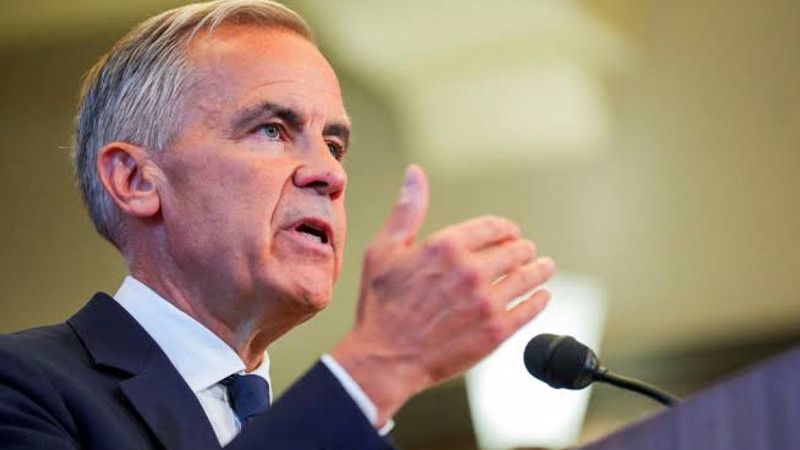
Losing Lake Ontario might be the least of Canada's worries right now. Those same liberal voters who once marched to the polls, chanting their triumph over Trump and cheering Mark Carney's defiance against the United States, have gone silent. Or worse, they're voicing regret. Yes, somewhere between campaign promises and ballot boxes, something broke — and it wasn't the United States. By the end of this, you'll know exactly why these voters are filled with remorse, why their government can no longer conceal it, and how Mark Carney delivered something his base never expected: a bitter taste of regret.
- Canadian voters are experiencing buyer's remorse as they regret their liberal votes from last year.
- Mark Carney's trade decisions have led to economic turmoil and job losses.
- Cracks are forming within Carney's party, and provinces are questioning their ties to Ottawa.
This phenomenon, commonly referred to as buyer's remorse, describes the regret many Canadians feel about their political decision last April when they awarded their liberal party a fourth consecutive term. Under the ultra-globalist leadership of Mark Carney, the nation has been steered into economic ruin . Carney's decision to walk away from trade talks with the United States led to Trump imposing a 50% tariff on $20 billion of Canadian goods. Trump's stance is clear: Canada has exploited its trade relationship with the U.S. for decades, running massive surpluses while relying on America for 75% of its exports, all while drifting closer to China, which Trump views as a national security threat. In retaliation, Carney announced reciprocal tariffs against the U.S., a move seen by many economists as economic suicide .
The consequences have been dire. Canada lost 42,000 jobs in August alone, 36,000 of which were full-time, even as their prime minister assured the nation it could survive without its largest customer. Meanwhile, the U.S. added 162,000 jobs in the same period. Canada's trade surplus with the U.S. plummeted from $4.2 billion to a mere $700 million, a staggering 40% collapse in weeks. Liberal voters were told the trade war was about "standing up" to Trump; instead, they got a 40% haircut on the one number their government touted. It's no surprise that 42% of Canadian manufacturers are considering moving production to the U.S., while 57% have cut or paused investments.
Canada's national unemployment rate of 6.4%, with Ontario over 7%, contrasts sharply with America's 4.1%. This is the difference between economic vitality and volatility. Within Carney's own party, discontent is rising. The Toronto Star reports that anonymous Liberal MPs criticize Carney for yelling and belittling caucus members who voice concerns. Out West and East, the Confederation shows cracks. Alberta flirts with secession, while Quebec sees independence gaining traction.
Carney's fight with Trump appears designed to rally "pan-Canadianism" against an external foe as provinces question their ties to Ottawa. This strategy may have worked in the last national election, but it seems less effective now. Ontario Premier Doug Ford threatened to cut off the Trans Mountain oil pipeline to the U.S., despite the pipeline's full capacity and lack of alternative markets. Chevron's $7 billion investment in Venezuela, while selling off Canadian assets, shows businesses aren't leaving due to ideology but because of the unstable regulatory environment in Canada.
Here's why Carney can't win this battle: 70-75% of Canada's exports go to the U.S., compared to 14% of U.S. exports to Canada. While 20% of Canada's GDP depends on the U.S., only about 1.5% of America's GDP relies on Canada. This isn't a trade war; it's a mismatch. Were Canada annexed as the 51st state, its per-capita GDP would rank 50th, just ahead of Mississippi. Texas alone, with a smaller labor force, produces nearly as much as all of Canada. Canada has already capitulated; nine years of blocking Gulfstream jets ended abruptly when Trump imposed tariffs on Bombardier. Two hours later, Gulfstream was certified, demonstrating the power of tariffs and Canada's dependency on the U.S. market.
Liberal voters are waking up to a harsh reality: they were promised a globalist technocrat who would out-negotiate Trump. Instead, they received 42,000 lost jobs, a collapsed trade surplus, a recession-level unemployment rate, and manufacturers fleeing south. Provinces like Alberta and Quebec are questioning their ties to Ottawa. Meanwhile, Trump continues to mock Carney with memes and renaming Great Lakes — he knows how this ends, and he's enjoying the show as Canada struggles with the hard lessons of basic math.
But there is a way forward. Recognizing these realities might just lead to a brighter future. To stay informed and inspired amidst these challenges, join us for uplifting insights and victories. Don't miss out on our Weekly Wrap-Up — sign up for free today at https://turley.pub/getaccess.
Until then, enjoy the view from Lake America.
© 2026 TurleyTalks.com. All rights reserved.
Gain the Clarity, Confidence, and Community you need to lead with courage and awaken a new conservative age. Join the movement to fight back and reclaim freedom at fight.turleytalks.com!
